








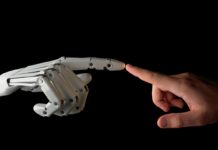











There's a gesture that unites millions of people every day, every hour: scrolling. A swiping thumb, a scrolling screen, a constant stream of videos, images, voices, faces. TikTok, Instagram, Reels, YouTube Shorts. It all happens in a few seconds, then it starts again. It's a hypnotic, almost automatic gesture, yet one that speaks to the state of contemporary society better than many statistics.
Yet, this isn't the first time we've witnessed a similar revolution. In the 1960s and 1970s, television had already transformed the way we experience time, how we inform ourselves and how we get bored. Channel- surfing , that nonstop changing of channels, was the hallmark of a new form of idleness: a passive and distracted activity. Today, scrolling is its direct heir. But if back then we were spectators, today we are simultaneously spectators and spectacle , consumers and content.
From modern to contemporary
The transition from modern to contemporary society is not just a matter of history, but of mental structure. Modernity believed in progress, in the linearity of time, in the construction of a collective narrative. It was the age of the factory, of state television, of the morning paper. Contemporaneity , on the other hand, thrives on simultaneity and fragmentation: constituted by the time of the algorithm, of the personalized feed, of the multiplicity of voices.
Sociologist Zygmunt Bauman would have called it a "liquid society": everything flows, nothing remains fixed. Philosopher Byung-Chul Han instead speaks of a "society of tiredness," where hyperconnection produces a form of self-exploitation and psychological exhaustion. Our free time is no longer a time for rest, but for self-exposure : every photo, every story, every video is a small performance of the self.
From zapping to scrolling
In the 1980s, zapping was a way to cope with boredom. Viewers looked for something to watch, but rarely found anything satisfying. The act of changing channels was a search for meaning within a continuous flow of visual stimuli. Today, it scrolling On social media it's the same thing, but taken to the extreme. We no longer look for specific content, but a constant level of stimulation.
The algorithm knows what we need: we are never bored, but we are never truly satisfied.
The difference, however, is crucial: television kept us stationary, social media makes us only seemingly "active." We comment, react, create, but almost always according to the logic imposed by the medium. We have become content producers for the attention economy , a machine that transforms every moment into data, every emotion into an engagement algorithm.
From diary to feed
There's another transformation that captures this shift well: the shift from travel diary to social media feed . Once upon a time, travelers jotted down their impressions in a notebook: places, smells, encounters, reflections. It was an intimate gesture, a writing that required slowness. Today, we document everything in real time: a photo of a plane ticket, a video of the sunset, an Instagram story. The diary has transformed into a public showcase , where the story serves not to remember, but to show off.
The paradox is that, despite sharing every moment, we risk not truly experiencing any of them . Travel time is broken down into moments designed for the camera, not for memory. Where once we wrote so as not to forget, today we post so as not to disappear.
Anesthesia and hyperstimulation of scrolling
We live immersed in an overabundance of content that, instead of enriching us, often anesthetizes us. Each stimulus, to be perceived, must surpass the previous one: briefer, louder, more emotional. The result is a sensory paradox: external hyperstimulation, internal impoverishment.
French sociologist Gilles Lipovetsky spoke of a "hyperconsumer society" in the 1990s: we no longer consume out of need, but to fill a void. Today, that void is digital. We scroll to avoid thinking, feeling, and stopping. Scrolling becomes a form of anesthesia: it keeps us awake yet asleep, present yet distracted.
An idleness without rest
In the past, idleness was a fertile space: a time for reflection, creative boredom, and contemplation. Today, we experience an idleness without peace . Even when we're still, our minds continue to move, carried along by the flow of content. There is no silence, no emptiness, no slowness. The algorithm accompanies us even in our sleep, suggesting who we are and what we desire.
Yet, this isn't about demonizing technology or social media. Every era has had its tools of distraction and its rituals of representation. Television hasn't killed reading, just as TikTok won't erase critical thinking. But the difference lies in scale and pervasiveness : today, distraction is no longer a moment, but a permanent condition.
Rediscovering slowness
Perhaps the contemporary challenge isn't to disconnect, but to learn to pause again. To rediscover the ability to look without recording, to listen without sharing, to live without documenting. The opposite of scrolling isn't renunciation, but presence : the ability to inhabit time instead of rushing through it.
Ultimately, every era has its own way of telling its story. Ours does so through a screen that scrolls inexorably. It's up to us to decide whether to remain hypnotized by the flow or reclaim the right to slow down.
Enrico Delle Donne
References
- Byung-Chul Han, The society of tirednessNottetempo Publisher, New edition, 2020
- Gilles Lipovetsky,A paradoxical happiness. On the hyperconsumer society, Raffaello Cortina Publisher, 2007
- Bauman Zygmunt, Liquid Life, Laterza Publishers, 2018


