

























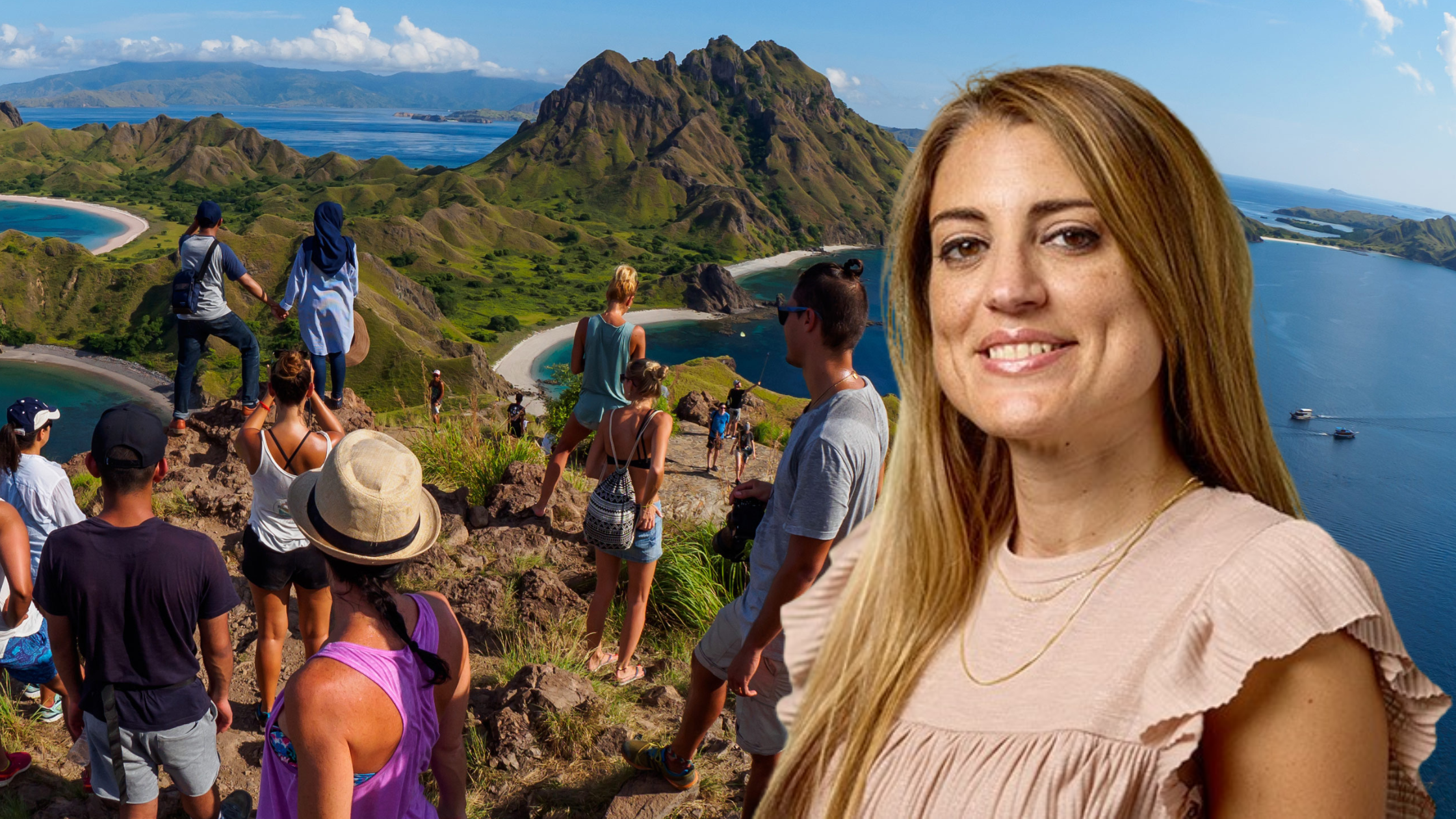
Interviews with eminent sociological scholars are always a wonderful and enriching experience when they happen. This time we "flew" to America, and it was a pleasure to discuss the sociology of tourism with Marta Soligo , Assistant Professor at the William F. Harrah College of Hospitality at the University of Nevada, Las Vegas (UNLV), Visiting Professor of Sociology of Tourism at the University of Bergamo, and a member of the American Sociological Association.
What is the Sociology of Tourism?
- From a sociological perspective, tourism seems to be a highly regarded subject of study recently due to its new dynamics and the impact it is having on local communities. First of all, how would you describe this branch of social science to someone new to sociology in general, but specifically to studies on the sociology of tourism?
Marta Soligo – “I like to explain that the Sociology of Tourism, which began to gain traction in the 70s, is based on the study of two main subjects: tourists and members of the local community (those who live in destinations). The Sociology of Tourism, like sociology in general, has two levels of analysis. There's the macro level, which studies tourism as a complex global phenomenon. It's a field that analyzes, for example, international tourism trends and is often based on a positivist model, using numerical data and statistics.”

"But not only that, critical sociology also plays a role here, especially for those interested in the systems of inequality created by the relationship between globalization and the travel industry. Then there's the micro level, which analyzes aspects such as the behavior of individual tourists or small groups, or members of local communities, leveraging, for example, symbolic interaction and social psychology. In this case, qualitative methods, particularly ethnography (as anthropology teaches us), play a key role."
A closely related branch of sociology
It's also important to emphasize that the Sociology of Tourism can be considered a branch of the Sociology of Leisure and is closely connected to other fields such as Urban Sociology and Environmental Sociology. I've already mentioned critical sociological studies, such as Neo-Marxism and decolonial theories, which are now more necessary than ever. Furthermore, we cannot fail to mention postmodernism and hypermodernism, as well as Bauman's studies on the liquid society and Urry's studies on mobility and the "tourist gaze," a concept he borrows from Foucault's "medical gaze," whose studies on surveillance are now more relevant than ever. I'll end with Augé's non-places, which, while not without criticism, have provided interesting insights. I'll stop here, but I could go on for hours!
Tourism and its impact on daily life
- Tourism plays a crucial role in certain economies. It's often heard, especially in Italy, that certain places could survive on tourism alone. In some ways, this seems both enthusiastic and naive... In your opinion, how much can tourism play an active and impactful role in people's daily lives?
MS – “ The concept of degrowth immediately comes to mind , which is becoming increasingly important in tourism studies. This concept emphasizes the abandonment of forms of tourism that evaluate the success of the destination solely based on economic value. If we focus exclusively on the capitalist imperative of financial growth at all costs, significant problems such as overtourism will continue to grow .”
Need for responsible tourism
" Why don't we instead, for example, start measuring a destination's success based on other parameters, such as the quality of life of residents and the environment? It's important to emphasize that the concept of degrowth, like that of sustainable development, is not without its critics: some scholars point out that both are based on Western-based models, thus risking failing to take into account different perspectives and contexts. When I discuss them in class, I use them as cues to show students the diversity of viewpoints, always encouraging them to practice critical thinking."
Furthermore, to return to the question, I'd also like to cite the literature on regenerative tourism , which is gradually offering interesting insights, as it goes beyond simple sustainability and focuses on co-creation and the inclusion of marginalized communities and identities. Tourism is not always a negative phenomenon. There are examples where local communities, often led by groups of women and young people, have created responsible and sustainable tourism models. However, if management is inadequate and tourism planning is done without a clear understanding of the negative consequences for residents and the environment, the impacts can be disastrous.
Why tourists can become a problem
- Tourists are commonly perceived as individuals who escape routine, seeking relaxation and, in some cases, tend to "lose their inhibitions." Consider those who steal stone from archaeological sites or create pseudo-graffiti and writings on monuments, or even sex tourism. Why is there this need to leave traces and/or engage in unusual behavior?
MS – “How often do I hear people say, ‘I'm not a tourist, I'm a traveler!’ It's almost as if they're ashamed of considering themselves tourists. This happens because, and it's no surprise, the word “tourist” has an increasingly negative connotation. The question you asked me highlights two key themes. The first is the obsessive need for authenticity that characterizes contemporary society . The desire to show others that we've actually been to a certain place has become a priority. And this happens even at the cost of demonstrating it through unethical behavior, like taking home pieces of rock or taking selfies with wild animals (which endanger both the animal and the tourist).”

Incorrect attitudes cause difficulties
The other is the idea that, especially among Western tourists, there's a bit of an attitude: "I pay, so I can do what I want ." So we see beaches full of garbage, tourists who treat local community members who work in hotels and restaurants in an unfair, often racist, manner, and so on. Occupying a privileged position, tourists often feel entitled to behave as they please. I saw this in a study I conducted in Las Vegas in the summer of 2020. In the midst of the pandemic, guided by the idea: "I'm in Las Vegas and I just want to have fun," tourists disregarded the rules, didn't wear masks, and didn't follow social distancing guidelines. Resort workers were extremely worried for themselves and their families; they even wrote a letter to the local newspaper.
Overtourism and other phenomena covered by the sociology of tourism
- We're hearing more and more about overtourism, in connection with housing rights and environmental damage. Think of mountain tourism, where waste too often presents an unsightly spectacle, but also of the buzz from social media influencers who generate uncontrolled tourist flows, as in the case of Roccaraso and the Neapolitan TikTokers of recent times. In addition, we're also witnessing the emergence of movements against the proliferation of B&Bs. So, how can sociology offer answers in terms of reflection and solutions?
MS – “Sociology can offer endless food for thought when it comes to overtourism. It's a shame that those involved in territorial planning haven't fully grasped this yet! Currently, for my research, I rely heavily on that branch of urban sociology, based on political economy, which studies phenomena like gentrification and delocalization.”
Overtourism has serious consequences for cities , and we must base our analysis on issues such as migration within and outside urban spaces, social inequality, and the right to housing. We should also consider research on place attachment: it offers a fundamental contribution to the analysis of how residents, in a context where homes are being replaced by short-term rentals and local shops by large chains, experience a sense of disorientation in familiar places. Another example comes from environmental sociology, which becomes extremely useful in situations where excessive tourist flows lead to environmental degradation. Cruise ships are often discussed in this context.
Macabre tourism and celebrity studies
- Among your various research topics, you also study a very specific phenomenon: tourism in Hollywood cemeteries, where stars are buried. To what extent do you think the mythical figure of the star—whose aura reverberates beyond death—can influence tourism? Is it possible to achieve this in other parts of the world, or is it a feature of the star system and American culture?
MS – “I'll start by saying that celebrity cemetery tourism is becoming increasingly popular all over the world, including in Italy. Just think of cemeteries like the Monumental Cemetery in Milan, but also the Sant'Anna cemetery in Asolo, which houses the body of Eleonora Duse, or the one in Rimini, where Federico Fellini rests with his wife Giulietta Masina and son Pier Federico. For me, cemetery tourism is sociologicamente very relevant, because it shows how much our discipline is linked to international studies on celebrity culture".
Dark tourism
" Today we tend to emulate stars, we want to feel close to them, take selfies with them, and, similarly, we visit them in cemeteries. During my ethnography in Hollywood cemeteries in Los Angeles, for example, I observed how the younger generations, having never had the opportunity to meet the great stars of the past, like Marilyn Monroe, are moved by their graves. Then there's also the whole issue of dark tourism, which consists of visiting places associated with death, suffering, and historical tragedies. Cemeteries often fall into this category."
In 2020 , I published an academic article analyzing how, in contemporary capitalist society, any element can be transformed into a product for sale or a tourist attraction. In this context, even cemeteries, traditionally understood as sacred and respectful places, can be reinterpreted as spaces of consumption. Needless to say, the issue raises numerous ethical reflections. To address the topic, I drew on the neo-Marxist theories of the Frankfurt School and Guy Debord's studies on the society of the spectacle.
How to do research in the field of tourism sociology
- Speaking to potential students, what do you think might be interesting research in the field of tourism sociology? More importantly, what research techniques would you recommend?
MS – “Right now, I see a lot of students interested in the topic of overtourism. I always suggest looking at the phenomenon from a comprehensive perspective. For example, to better understand the underlying issues, it would be interesting to conduct qualitative interviews with various stakeholders to understand the perceptions of key players such as residents, political institutions, and tourism professionals. Another topic that fascinates younger generations is the relationship between tourism and the environment , which can be approached both quantitatively, for example by analyzing pollution statistics in certain destinations, and qualitatively, again through interviews or ethnographic field studies. In general, when it comes to research, I always suggest working on something that excites us. Tourism is a complex phenomenon and offers a wealth of theoretical and methodological insights.”

Lecturer in Communications and HR Management. Journalist with a degree in Sociology (cum laude). Editor-in-Chief of Sociologicamente.it.
PUBLICATIONS | LINKEDIN


