


























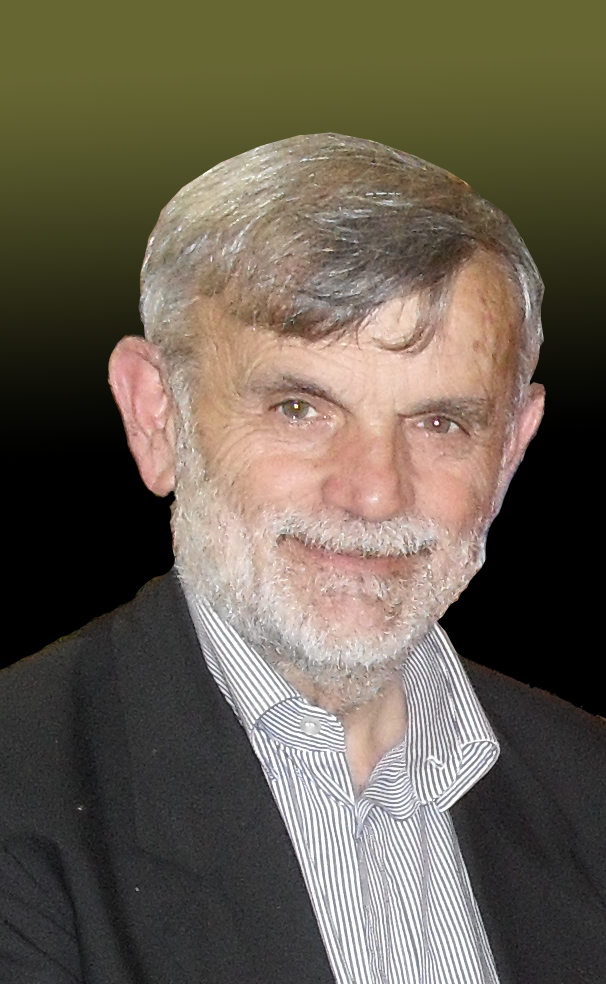
Whatever people say, sociology studies and accompanies change . Interest in religion has particularly grown during this pandemic . In this regard, it was interesting to chat with Professor Roberto Cipriani , Professor Emeritus of Sociology at Roma Tre University. To name just a few of his extensive resume, he was president of the Italian Sociological Association and president of the European Council of National Sociological Associations in the European Sociological Association . His publications concern theoretical and methodological issues and cultural and religious phenomena. Several of his essays have been published in English, French, German, Spanish, Portuguese, and Russian. From 1990 to 1994, he was president of the Research Committee on Sociology of Religion at the International Sociological Association.
Religions are protagonists today
- What role does religion play in this historical period?
Roberto Cipriani – “ It cannot be said that religion has ever ceased to play a role in the various phases of human history . Even more so in troubled times. The widespread response to Pope Francis , almost alone in St. Peter's Square one late afternoon last spring , provides clear proof of this. As far as Italy is concerned, a survey is currently underway to ascertain how the various religions present in our country have addressed the pandemic, which is still ongoing. I am particularly interested in the world of Christian orthodoxy. However, I believe that every religion has played a leading role in the current events .”

RC – “If we then want to refer to a crisis of religions , to a decline in practice but also in belief, the discussion appears even more complex, as shown by the data from the national survey on religiosity in Italy, conducted in 2017 by Franco Garelli of the University of Turin for the quantitative part (3238 interviews with a statistically representative sample of the Italian reality) and by me for the qualitative approach (164 interviews, both completely open and mixed, i.e. partly open and partly focused, following a reasoned stratification by educational qualification and then by gender, age, demographic size of the place of residence, as well as by interregional area). On this subject, the volumes by Garelli ( People of Little Faith. Religious Sentiment in Italy Uncertain of God , il Mulino, Bologna, 2020) and mine ( Uncertain Faith. A Quantitative-Qualitative Survey , FrancoAngeli, Milan, 2020) have recently been published”.
There is always an influence on society
RC “In fact, the different religions , despite fluctuating trends in relation to some indicators, maintain their weight in influencing the attitudes and behaviors of people , even those who declare themselves non-believers and yet are involved in addressing religious issues, perhaps even just to make critical observations”.
RC – “As a result of the changes brought about by the needs induced by the contagion, various religions have paid much greater attention to new technological discoveries , using them increasingly frequently and re-proposing various aspects typical of so-called televangelism, widespread in North, Central, and South America. Thus, ministers of worship tend to favor methods and times that have a greater impact on the population, aiming to grow their audience in order to reach many more people, especially the weakest, the elderly, and the disabled. This set of innovations aims to exert a strong attraction , using spectacular, liturgically well-curated proposals and led by charismatic figures with musical and choreographic accompaniment .”
All great sociologists are interested in religion
- Why is it important to study the phenomena connected to it from a sociological point of view?
RC – “For the same reasons that can be deduced from the previous answer but also from a simple statement of facts, which in sociology are at the origin of any cognitive procedure: the greatest sociologists of the past and present have examined the religious phenomenon . Indeed, for some of them, the religious question constitutes the focus of greatest attention : for Comte as for Durkheim , in the case of Weber and Simmel, following Berger but also Luckmann. And one could go on much further.”
RC – “ History itself tells us of the close ties between society and religion , especially between politics and religion, as Bryan Turner has well shown, starting from ancient Greece (see Religion and Politics: A Comparative Sociology of Religion , Armando, Rome, 2018). Monarchy, marriage, law, and conversions represent a common thread that allows us to examine the numerous relationships (and interferences) between State and Church. In the background looms the preeminent issue of freedom of worship , which, formally declared but denied by events, presents various cases of violation of universal rights .”
Digital technologies support liturgies
- Many priests have conducted masses on line on sharing platforms like ZOOM, live Facebook, groups of WhatsApp, etc. In your opinion, can the desire for community offered by collective prayer be strengthened or weakened in the digital realms of the web?
RC – "Technology is certainly a great help in many activities, but it always requires direct human input to manage the various operations and make communication more effective. Religious personnel are quite well-versed in using innovative techniques to enhance their pastoral work. This applies to many situations: from electronically ringing bells to summon the faithful to communicating via loudspeaker with those outside the church or its surrounding areas, from broadcasting services, prayers, and songs via radio and/or television to extensive use of social media to connect with an ever-growing circle of devotees and non-devotees alike."

RC – “The biggest change was the complete closure of places of worship for several weeks during the first wave of COVID-19. This forced many church workers to find alternatives to Mass celebrated with attendees present on site . This prompted celebrants to reconsider various aspects of their delivery , homilies, prayers, chants, and distribution of the Eucharist. In this regard, a now-obsolete solution was revived: the so-called spiritual communion, a formula that invokes the “spiritual” coming of the Body of Christ even to those not physically present in the liturgical space.”
In the absence of hugs, we seek new signs and symbols
RC – “Obviously, the practice of community is no longer the same . What was experienced through personal presence and interpersonal interaction cannot be replicated over the airwaves. Yet streaming Mass ( or even deferred Mass) manages to some extent to fill a void that would otherwise be unsustainable in the long run. During the second wave of the pandemic, various forms of worship were allowed to provide access (albeit limited) to churches , thus obviating a whole series of relational and ecclesial inconveniences. But in the meantime, in the case of Catholic ceremonial, perhaps the most innovative , effective, and symbolically comprehensible element of the entire liturgical reform approved during the Second Vatican Ecumenical Council (1962-1965) had to be abandoned : the exchange of the sign (now called the gift) of peace (a handshake, a hug, a kiss, a gesture of friendship).

RC – " The various religions, aware of the constant need for the sacred (quite evident during the pandemic), are trying to meet the faithful's requests for strong and useful support in dealing with the dramatic events of the contagion. The leaders of the various religions are points of reference for much of the population seeking support and comfort in the most challenging and risky situations. It is no coincidence that the most cited figure overall on social networks is Pope Francis ."
You can go out to pray, but you must do so safely.
- In France, during the spring of 2020, the closure of places of worship sparked protests and controversy. In other countries, closures were considered. What's your opinion? Is it better to close or stay open?
RC – “Indeed, protests and controversy have not been lacking in Italy either, especially from more traditionalist groups. Pope Francis, however, clearly stated that the regulations issued by the Italian government had to be observed. Subsequently, when it came to deciding what to do when the new infection season arrived, it was deemed more appropriate to allow attendance at churches and other religious sites, while adhering to established health and hygiene precautions: social distancing, handwashing with antiviral liquids, and the constant use of masks to adequately cover the mouth and nose. This has reinstated the custom of personally attending weekly religious events, while also offering a valid reason to leave the house even in areas and at times marked by the most restrictive color (red).”

RC – “Generally speaking, this hasn't created any further opportunities for the virus to spread , and primarily, it's provided an opportunity to better cope with the discomfort of being confined to our homes , finding some relief and interrupting the long periods of extended, almost monastic confinement. Therefore, this is a welcome option.”
The pandemic is an opportunity to return to solidarity
RC – “According to a survey conducted by Ipsos and directed by Franco Garelli (who reported it in Il Messaggero on March 30, 2020, page 15), among a statistically representative national sample of 1000 people between the ages of 18 and 75, 16% of respondents said they prayed more than before the pandemic. Specifically, 26% of the sample stated that they “feel a greater need to have a spiritual life, to cultivate spiritual values.” However, these data are more relevant to those who are already believers and practicing, less so to those who tend to have a looser sense of belonging. Non-believers, on the other hand, have not seen any increase.”

RC – "Twenty-three percent also stated that they participate often or fairly frequently in online religious services (this figure roughly corresponds to the percentage of regular weekly participants). Even in this case, the involvement of more peripheral believers is minimal. Nonetheless, support for new forms of religious communication is quite broad, involving approximately two-thirds of the population (63%). At the same time, 68% of those surveyed supported the decision to keep churches closed, and 61% supported the decision not to hold religious funerals (except for the blessing of the body)."

RC – “ About half are positive about keeping churches open for individual attendance, but just as many are against it , and 10% remain silent. Religious volunteering during times of contagion is appreciated. Furthermore, 70% do not view the spread of the virus as divine punishment . And 80% view the dramatic situation as “a propitious time to return to being more human and supportive .” About half of the sample considers the COVID-19 event a sort of divine message and a reminder of what is most important in life.”
To learn more

Lecturer in Communications and HR Management. Journalist with a degree in Sociology (cum laude). Editor-in-Chief of Sociologicamente.it.
PUBLICATIONS | LINKEDIN


