


























Holocaust Remembrance Day is an international holiday celebrated on January 27 to commemorate the many victims of Jewish origin. The Second World War, in addition to sowing unjustified racial hatred, is estimated to have also resulted in the deaths of six million Jews.
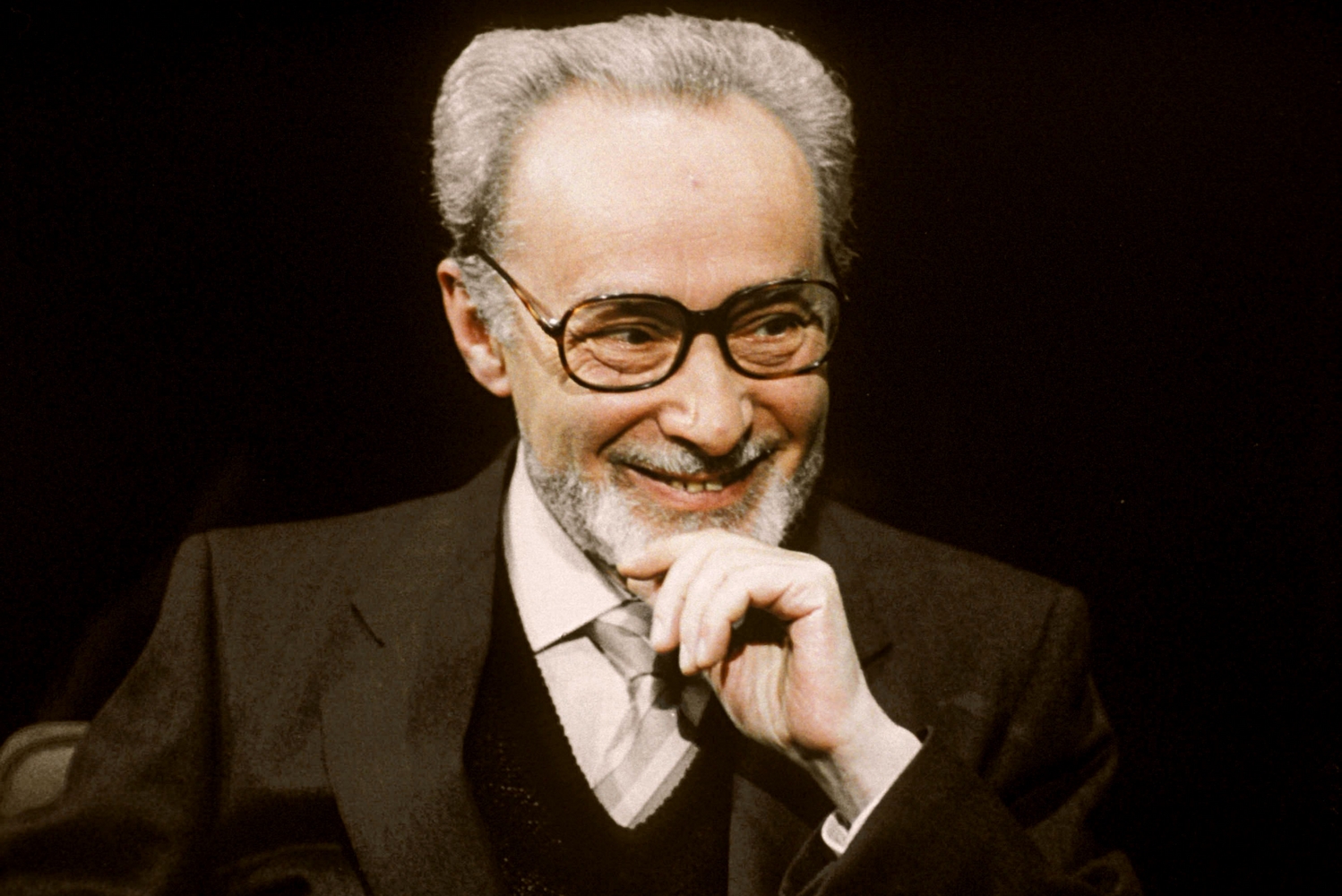
(If This Is a Man, P. Levi)
Durkheim stated that sociology's task was to answer society's questions, concerns, and problems. However, the Holocaust resulting from the Second World War defies all human logic and reasoning. The question various scholars posed was how to understand the mechanisms underlying such a strong sentiment as hatred, better defined as anti-Semitism.
Holocaust Remembrance Day: an example to remember… to avoid
It is also important to remember that hatred was not only directed at Jews, but also at all homosexuals and the disabled . The ideology of the Aryan race echoes, even if only vaguely, the white man's burden, a famous poem by Rudyard Kipling.
The goal was to cleanse their lineage and give it the praise it deserved by creating a sense of supremacy over other ethnic groups and cultures simply because they were different. Brutalities such as forced sterilization and identifying tattoos highlight the objectification and commodification of the resource of human life.
The brutality present is not only attributable to forced labor or multiple murders, but also deserves particular attention the brutal experiments conducted by Nazi doctors . Examples of this are those involving infectious diseases, toxic substances, and even bones.
Experiments on infectious diseases involved vivisection of patients, thus allowing doctors to understand the progression of the disease and which drugs were best for treatment. Experiment conducted in the Auschwitz concentration camp by doctors Josef Mengele and Heinz Thilo.
The brutality of the experiments
The brutality of Dr. Fischer's experiments on bones, muscle tissue, and nerves also cannot go unnoticed. He was assisted in this atrocious task by Dr. Oberheuser, who was in charge of selecting the prisoners, and Dr. Gebhardt, who was in charge of the experiments. The experiment involved cutting into limbs and removing bones and tissue to understand the logic of the transplants.
However, their negligence in sterilizing work tools and the affected body areas was the cause of several deaths. A patient could undergo the same procedure up to six times, and the few survivors were left crippled.

This ferocity did not subside , but continued with poisoned food and bullets, and with experiments on toxic substances such as asphyxiating gases like phosgene and mustard gas. Phosgene caused pulmonary edema and, in liquid form, caused severe skin burns. Mustard gas was a powerful chemical, toxic, and blistering.
The turning point: the Nuremberg trials
A turning point came with the Nuremberg trials in 1946-1947, which resulted in sixteen convictions, seven of which were capital punishment. Nazi doctors attempted to justify their actions with the miserable claim that their experiments were justified by the advancement of science, forgetting that the primary task of medicine, and its axiom, is health and well-being.

Only then can the process and progress of medicine be considered , but without sacrificing human lives and requiring such sacrifices. The judges incorporated a code into their ruling, called the Nuremberg Code , to guarantee the rights of people subjected to medical experiments. However, it is important to highlight the essential requirements, such as the absolute, free, and voluntary consent of those undergoing experimentation (Article 1). The experimental method must, in any case, avoid suffering and non-essential physical and mental injuries (Article 4), thus producing results that are inevitably beneficial for society (Article 2).
The atrocities are numerous , and the testimonies are concrete proof of how brutality can creep into relationships with others. Holocaust Remembrance Day serves to remind us of the horrors to which humanity is capable. Extremes must be exposed so that such atrocities are never repeated. How, then, can this be done? Through reading and watching survivor testimonies. Among those made famous are Anne Frank's Diary and Primo Levi's If This Is a Man . Of particular note are the publications by Senator Liliana Segre, such as the 2015 book Memory Makes Us Free .
“Cultivating Memory is still a precious vaccine against indifference today and helps us, in a world so full of injustice and suffering, to remember that each of us has a conscience and can use it.”Liliana Segre
Rosetta P. Gatto


