




















Media and television attention on cases of violence against women and femicide has been at a fever pitch following yet another crime story involving the discovery of the body of Giulia Cecchettin, killed by her ex-boyfriend Filippo Turetta.
The public realization that Giulia was dead even before her body was discovered was dramatic , confirming that in today's society, a causal connection has become " normalized," meaning that if a woman disappears or dies, in most cases, it will be at the hands of a violent boyfriend or ex-boyfriend . Perhaps it was precisely this bitter realization that sparked public anger and protest, which are giving rise to numerous demonstrations throughout Italy.
Gender violence remains a systematic phenomenon, with femicide being its most extreme manifestation. In almost all cases of violence against women, the perpetrator is a man and the victim is a woman. This data highlights a worrying cultural connotation to the phenomenon, rooted in patriarchal culture.
The consolidation of patriarchal culture in capitalism
Given that many scholars trace the origins of patriarchy back to ancient mythology and that it is very complex to establish a precise date of the phenomenon's origin, I found Silvia Federici's book "Caliban and the Witch: Women, the Body, and Primitive Accumulation" very interesting. She conducted extensive research to understand the changes in patriarchy during the transition from feudalism to capitalism. In my opinion, this book should be read alongside Marx's "Capital" for a more in-depth understanding of the phenomenon.

Federici analyzes the division of sexualized labor that occurred in the sixteenth century, where women were demoted from their former work roles and redefined as daughters, wives, and mothers. In this scenario, men continued to be granted both full access to labor, even that previously held by women, and power over women's bodies. Thus, women, who already lived in an environment that had never equaled male-female power relations, "lost everything," even the ability to decide when to reproduce. In this sense, the female body was classified as a "common good" (Federici, 2004 p. 140) aimed at procreation, which occurred according to the man's wishes.
“The female body was transformed into a means of reproduction and growth of the workforce, treated as a procreative machine, functioning according to rhythms that would escape women's control.” (Federici, 2004 p.129).
Violence against women is not only physical but also "systemic"
From the 17th century onwards, the requirement that women perform exclusively domestic work to support their husbands began to spread, further degrading women's skills and definitively losing all economic independence. These were the years in which marriage began to be considered the only possible aspiration for a woman, with all attempts to work being repressed, expelling them from the village where they lived. For women, this historical period represented an unprecedented defeat, as expulsion from the workforce not only declassified them as reproductive women, but also placed them in a situation of economic dependence on men.
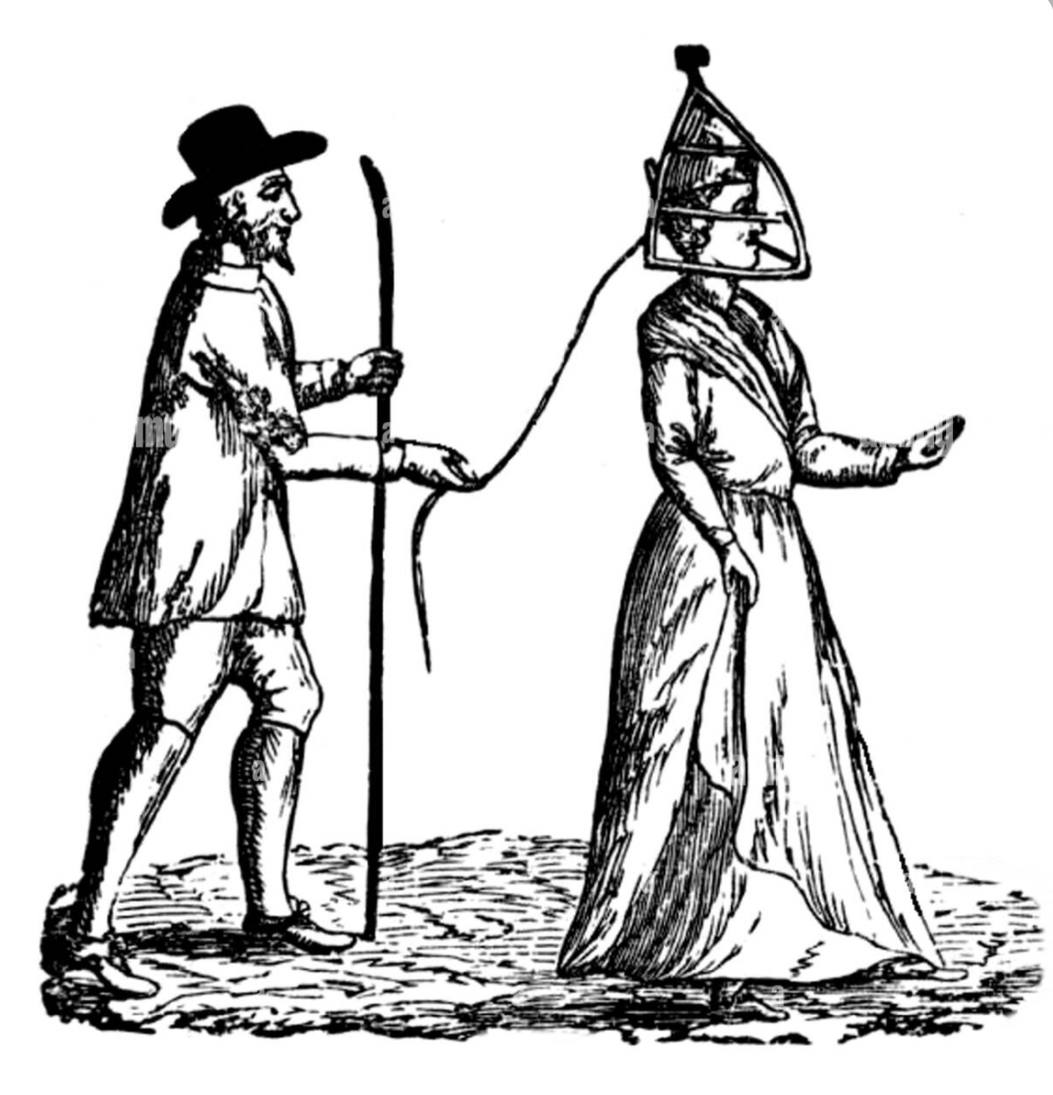
In this social context, a cultural shift began that maximized gender differences and punished women who disobeyed patriarchal authority. Federici reminds us that during the Elizabethan and Jacobean periods, English literature was overflowing with these themes. Shakespeare's epochal play, "The Taming of the Shrew," is particularly famous. During this period, torture techniques were also introduced to punish rebellious women. For example, "shrewish" women were given a bridle , a type of muzzle attached to a leash, on which they were led around the city.
In the 18th century, after two centuries of repressed women's revolts and witch hunts, a new model of femininity emerged: that of the sexually pure woman, obedient and content to carry out her "work" as a mother and housewife (Federici, 2004, p. 149). This model of femininity remained alive until around the end of the 18th century, when the first feminist movements began to emerge.
Some dates that mark the first Italian victories against the patriarchate
If we consider the gains in freedom achieved by women in Italy, we can see that these are, after all, very recent. Only in 1956 was the "ius corrigendi" abolished , that is, the right a man could exercise to "correct and educate" a woman and her children, even by resorting to force. In 1971 , the contraceptive pill was introduced, allowing women to be actively responsible for their own contraception. Indeed, as early as the Middle Ages, women used contraceptive methods that allowed them almost absolute control over their motherhood, but between the 16th and 17th centuries, legislation spread across much of Europe that outlawed the use of contraceptives and, consequently, prohibited women from freely deciding when to have children.
Furthermore, until 1975 in Italy there was the “patrial authority” which recognized the father alone as having the right and duty to support and educate minor children and until 1981 there was also the law of reparatory marriage and honor killing.
Violence against women as a crime against morality
In 1996 , only 27 years ago, sexual violence was considered a crime against public morals and decency , not yet a crime against personal freedom. Only in 2009 was stalking recognized as a crime, with Legislative Decree no. 11 of February 23, 2009, converted into Law no. 38 of April 23, 2009, which introduced the crime of stalking into the Criminal Code, provided for and punished by art. 612 - bis of the Criminal Code . Only in 2019, art. 10 of Law no. 69 of July 19, 2019, included the crime of unlawful dissemination of sexually explicit images or videos, better known as revenge porn, into the Criminal Code , provided for and punished by art. 612 -ter of the Criminal Code.

From this brief historical excursus , which highlights only a few normative victories in the field of gender equality, it is clear that the battles for equal women's rights have been essential but that these are only the beginning of a cultural revolution aimed at completely eradicating the patriarchal and possessive culture.
Laws are not enough to combat violence against women.
Stiffening penalties for gender-based violence is important, as is prompt law enforcement intervention when a woman seeks help or wants to report it. For this reason, it is essential that all police officers be adequately trained to receive reports from victims, without causing them to feel guilty or suffer secondary victimization (which I will discuss in more detail in another article).
Preventive measures always prove to be the most effective, so just as periodic screening is essential in the medical field to reduce the risk of death from serious illnesses, violence against women should no longer be addressed purely as an emergency, focusing solely on harsher penalties at the time the crime was committed. In this regard, systematic emotional education, conducted both in schools with students and in specialized centers with parents, families, single couples, and engaged couples of all ages, could yield positive longitudinal results.
How each of us, in our own small way, can fight the culture of patriarchal possession
Let us not remain indifferent.
I believe that first of all we need a collective awareness that allows us to recognize that patriarchy still exists and that we are all part of it , some more than others.
Only by becoming aware that many of the actions we take, the thoughts we think, and the things we say are symptoms of a culture rooted in centuries-old ideologies of ownership, inequality based on gender, sexual orientation, and ethnicity, can we lay the foundations for eradicating it.

As long as we continue to deny the evidence, as long as we remain stuck in our conventions, as long as rigidity of thought prevails over flexibility of thought , as long as we don't find the courage to think that 'maybe this behavior isn't so right after all', then we will remain stuck here.
And the demonstrations we hold, no matter how much noise they make, will run the risk of dissolving like clouds after a storm.
Sara The Strawberry
Bibliography
- Silvia Federici, Caliban and the Witch: Women, the Body, and Primitive Accumulation. Introduction by Federica Giardini and Anna Curcio, Mimesis passato prossimo, Milan, 2004
- https://www.istat.it/it/archivio/291163


