


















Reflecting on and redefining the concept of human resources today, transcending the traditional conception, is far from simple. First, we must take into account that contemporary society is dynamic and constantly evolving. Consequently, a sociological perspective is no longer simply desirable, but rather a necessary skill for intelligent management and innovation.
Transition

We live in a period of transition and uncertainty—further emphasized by the COVID-19 emergency—that is difficult to categorize. There is a heightened perception of potential risks due to the lack of master narratives (Beck, 2013; Lyotard, 2014) and the notable presence of fluid forms capable of representing and influencing our collective imagination (Brancato, 2010). Today, the separation between homo faber and homo ludens no longer exists , as the clear distinction between work time and leisure time has crumbled, as has the definition of space assigned to one type of activity or another. Indeed, the two dimensions tend to overlap and blur. Society is changing, as are its actors, its institutions, and the ways in which these actors organize themselves.
Sociology of organization

Organizations, especially large ones, according to Charles Perrow (1991), have aspired to a large part of what society has always been thought of as, and from being merely a part of it, have become a sort of surrogate. By studying organizational changes , and therefore how they have evolved – and how they evolve – over time, it is possible to understand in turn how the behaviors of those who inhabit them change. History bears witness to the evolution of organizations through the succession of very different theories. If we think only of the "business organization" typology, it is impossible not to recall the transition from Taylor 's OSL to William Ouchi 's Theory Z of organizational culture in the 80s , and then arriving at proactivity and new technologies in the networked enterprise with which workers today must increasingly interface (Invernizzi, 2000).
Not resources but people

In light of these changes and in reference to HR, we can no longer speak simply of entities possessing or lacking a certain quantity and type of human capital, but rather, attempting to transcend Anglo-Saxon terminology , of people with a unique biography determined by exogenous events (social relationships) and endogenous elements (personality), whose testimony translates not exclusively into a tecné , a know-how, but also into a savoir-être. This latter proves to be a fundamental stage in the construction of the self, bringing into play the pedagogical discourse of Socratic paideia , the "knowledge of not knowing": the transversal formation not so much of the abstract subject as of the concrete person with social dignity (Rodotà, 2015).
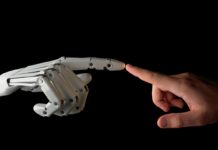
Let's get the machine-man out of our heads
Human resources would no longer be seen as cogs in a machine-like system that are subject to externally directed directives, but as actors who participate in organizational life by taking on their own roles and experiences, and who must be both guided and managed, not only to meet the organization's demands, but also to have the opportunities and abilities to educate themselves, and therefore grow, even independently.
Francesco D'Ambrosio
Beck U., Risk society, towards a second modernity, Rome, Carocci, 2013;
Brancato S. The Fluid Shape of the World: Sociology of Audiovisual Narratives in Film and TV Series, S. Maria Capua Vetere, 2010;
Invernizzi E., Organizational communication: theories, models and methods, Milan, Giuffrè, 2000;
Lyotard JF, The Postmodern Condition. A Report on Knowledge, Milan, Feltrinelli, 2014;
Perrow C. a society of organizations, in “Theory and society”, 20 (6) pp. 725-762, 1991;
Rodotà S., The Right to Have Rights, Rome, Laterza, 2015;

Lecturer in Communications and HR Management. Journalist with a degree in Sociology (cum laude). Editor-in-Chief of Sociologicamente.it.
PUBLICATIONS | LINKEDIN


