

























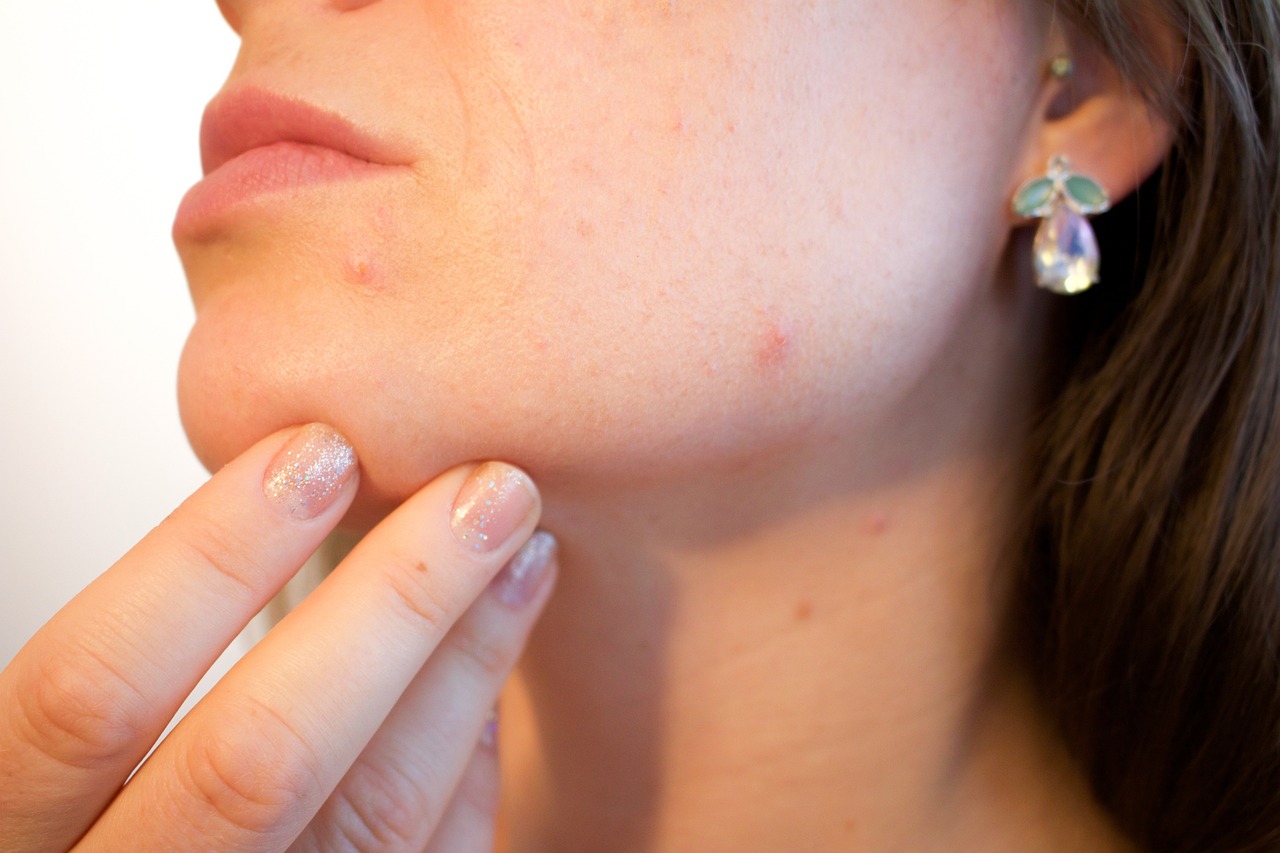
In a contemporary landscape permeated by attempts at oppression, political, and cultural conflicts, we cannot fail to consider the fluidity of a phenomenon that has always existed, sometimes latent and underlying, such as discrimination—and in some cases—psychosocial violence against physical conditions like acne. It can insinuate itself, branch out, and proliferate in various forms, so much so that over time it has been given various names (racism, sexism, chauvinism, bullying, cyberbullying, etc.) depending on the context, relational dynamics, and social actors involved.
Imagery of beauty
Through what Appadurai would call "-orami" (2012), responsible for the process of globalization, a collective imagination is constructed regarding many aspects of the human being , including that of external beauty. This theme is extremely important, as one not only possesses a body, but also is a body. This body tells a story and externally expresses internal evolutionary processes that involve and shape identity. External change, in fact, often corresponds to internal change: the adolescent phase – a delicate period in which the foundations of a future personality are laid – is full of transformations and difficult attempts at internal and external adjustment.

Studies on eating disorders show how food refusal in adolescence and/or adulthood can have its roots in breastfeeding, and how the behavior of key caregivers influences and determines its onset. Therefore, while identity is constructed, deconstructed, and distorted internally, the body undergoes changes that affect various parts of the body, including the skin. One of the problems experienced, not only by adolescents but also, in some cases, can appear or persist into adulthood, is acne.
Biomedical definition of acne
According to a biomedical definition, acne vulgaris is characterized by the formation of comedones, papules, pustules, nodules, and/or cysts following the obstruction and inflammation of the polysebaceous units (hair follicles and their corresponding sebaceous glands). Excessive sebum production—necessary to protect the skin from infection—is irritating in predisposed individuals and facilitates the formation of comedones or blackheads, the main obstacle to drainage from the gland to the surface. Acne is officially considered a skin disease, but the psychological consequences, the social conditions that characterize the sufferer, and cultural issues are not given sufficient consideration.
To better understand, one could refer to the use of the triad Disease, Illness, and Sickness in health sociology and medical anthropology. Andrew Twaddle applied it in his 1968 doctoral thesis, distinguishing: "disease" in reference to the biomedical model and physiological malfunction, "illness" to indicate the sense of suffering, the undesirability of the illness that the subject is forced to endure, and "sickness" as well as the interpretation that others make of the individual's illness, therefore social identity (1979: 18).
Double messages from the company
While we're bombarded with advertising urging us to buy the latest salicylic acid product, a box of easily digestible zinc supplements, or an exfoliating scrub for flawless skin, an individual with acne may have a socioeconomic status that doesn't always allow them to fight for treatment. Added to these concerns is the fact that appearance -related suffering isn't taken seriously : common sense holds that caring for the most superficial part of one's body is a sign of vanity, an extra that doesn't deserve much consideration compared to other types of illnesses. Adolescents suffering from acne, on the other hand, often become victims of verbal and physical abuse, both direct and indirect, in the social circles they frequent: intrusive stares, blaming narratives, and unwanted remarks are some of the fears an individual with acne tries to avoid.

Acne: A relativistic perspective
Such dynamics convey conflicting messages, the product of a deeply rooted cultural problem that denies tolerance of otherness, represented not only by those far away, but also by those close to us who experience different experiences and challenges. Skin characteristics, in fact, have determined significant dynamics throughout history, marking important changes that have seen political activists oppose all forms of racial segregation and discrimination. Skin has been at the center of slogans aimed at bringing about a true cultural revolution , as through it, every human group expresses its collective, but also subjective, identity and, no less, its own concept of "beauty."
In the East, the more a woman has studied, the more prestigious and successful her job, the more radiant her skin becomes, with a more even complexion. These features become role models for Western women and adolescents who find themselves admiring them on social media and, often, suffering the frustration of not living up to the stereotype. In Nigeria, however, facial scarifications are intentionally drawn marks and considered identification codes of one's tribe. In this cultural context, the human body becomes a vehicle for artistic expression, a manifestation of one's social status, and is imbued with symbolic and cultural meanings through which the stories of entire generations are told.
Acne: A phenomenological perspective
The skin is not only an expression of a collective identity, but is also influenced by what happens within the individual, acting as the first layer that the process of embodiment finds itself crossing. According to Le Breton (2006: XI-XII), being there implies that "there is no fracture between the flesh of man and the flesh of the world. The individual becomes aware of himself only through feeling and experiences his own existence through the sensorial and perceptive resonances that constantly pass through him." This opens the way to the understanding of the corporeal self, as well as the awareness one has of one's own body. Husserl believes that "my body is divided into partial organs; each of the members of the body has the property of allowing me to act immediately in it: by looking with the eyes, touching with the fingers, etc., I can act in any perception, precisely in all these ways" (1997: 240).
Ponty and the consciousness of the body
This perspective is best explained by Merleau-Ponty, who states that "the awareness I have of my body is not an isolated block of consciousness [...] the various sensorial domains (visual, tactile, sensory, etc.) involved in the perception of my body do not present themselves to me as regions absolutely alien to one another" (1968: 88). According to this phenomenological perspective, human beings are "thrown" into the world and develop, also through relationships with others, an awareness of their own self. For this reason, suffering acts of verbal or physical violence because of acne gives rise to psychological problems, especially if the disease profoundly affects one's identity, allowing social anxiety – linked to negative judgment – to take over.

According to psychosomatic studies , which for obvious reasons distance themselves from perspectives based on the mind/body dichotomy, acne originates from the fear of rejection by others and the resulting difficulty in accepting oneself. From this perspective, rejection by others is not the consequence, but rather the cause, of epidermal stress. Some psychological problems resulting from acne include depression, anxiety, and eating disorders.
The importance of empathic listening
Consulting a dermatologist is one of the necessary measures a person suffering from the disease must take, but psychological support is also essential to help the individual achieve self-acceptance and positive self-esteem, which is essential for dealing with even the simplest everyday situations.
The dual messages that acne sufferers receive from society are countless: on the one hand, the "self-love" rhetoric that focuses on normalizing and, in some cases, valorizing inflammation and scarring; on the other, the advertising bombardment promoting products to combat "imperfections." If we add to this the individual's financial inability to afford medical expenses, the discomfort experienced in the simplest, most everyday circumstances (while taking a photo, a day at the beach, or a casual conversation), the repression of one's will to avoid risky situations, and forms of discrimination and marginalization, the picture completes and highlights the sense of helplessness felt in the face of all this.
The narrative of beauty
Narratives surrounding beauty are becoming increasingly contradictory and, in some cases, harsh judgments against large groups of people who, like others, have the right to express themselves without being offended by their appearance. If it's true, as Michael Taussig points out following his studies in Colombia, that beauty can be compared to the beast—a rigid, merciless idea, directed at one's own body and that of others, and driving one to extreme acts—it becomes increasingly urgent to provide adequate tools to confront it. The first step is authentic and empathetic listening, attempting to see the world through the eyes of another. Observing the patient from a phenomenological perspective allows us to go beyond the mere social role they occupy and consider the individual as a precarious body, incapable of lying and struggling to comply with rigid social rules.
Francesca Noemi Pia Carello
References
- Appadurai, Arjun, 2012, Modernity in dust, Raffaello Cortina, Milan.
- Onion, Constantine, 1997, Epistemology of tolerance, FrancoAngeli, Milan.
- Husserl, Edmund, 1996, The crisis of European sciences and transcendental phenomenology, Il Saggiatore, Milan.
- Merleu-Ponty, Maurice, 1962, Phenomenology of perception (C.Smith, Trans.), Routledge & Kegan Paul, London.
- Le Breton, David, 2006, Knowledge of the World: An Anthropology of the Senses, Raffaello Cortina, Milan.
- Twaddle, Andrew, 1979, Sickness Behavior and Sick Role, G.K. Hall & Co., Boston.
- Sitography:
- www.farafinasvoice.com
- www.humanitas.it
- www.laurapirotta.com
- www.psicologiafenomenologica.it


