

























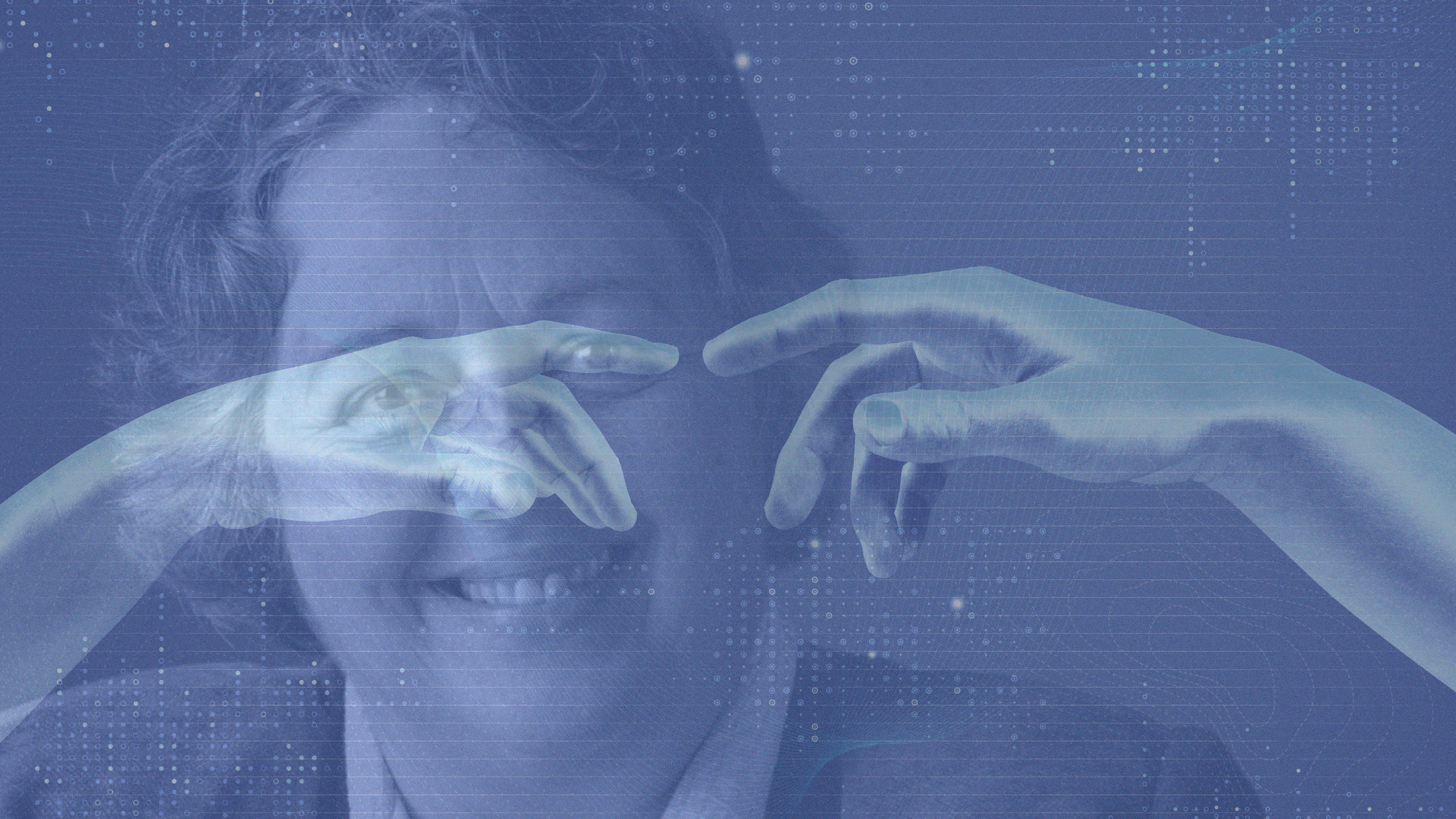
Feminist philosopher and critic Rosi Braidotti presents the concept of biocentric egalitarianism , which is part of a broader reflection on the relationship between humanity, nature, and other nonhuman life forms. This is a critique of the anthropocentric worldview, which places human beings at the center of ethical, social, and political reflection in favor of an approach that recognizes the dignity and value of all life forms. Let's explore the concept in more detail.
What is biocentric egalitarianism?
In biocentrism, centrality is no longer attributed to the human being but to the entire ecosystem and all living beings. It proposes a vision in which all living organisms , human and nonhuman, have equal dignity and rights , without hierarchies or clear-cut separations. This calls into question the principle of the traditional order between species, where humans occupy a superior role compared to other living beings. Braidotti, with his exploration of post-humanism, offers an alliance between different forms of life, challenging the concept of anthropocentrism.

Biocentric egalitarianism can therefore be interpreted as a challenge to the political structures that legitimize the exploitation and abuse of nature and animals. It proposes a radical restructuring of philosophical and political thought, promoting a holistic and interrelated vision of the world and an ethic of interconnection, of shared responsibility towards the environment and between species.
The relationship between man and machine
Braidotti also offers the connection between humans and machines as a central theme of his thought . In his post-humanist reflection, he proposes a broadened version of biocentric egalitarianism, according to which machines and technologies are viewed not as subordinate or separate objects, but as true integral parts of an interconnected and co-evolutionary world.
In this framework, therefore, machines are not simply tools at the service of humanity , but entities that, together with humans, animals, and nature, contribute to a constantly evolving ecosystem of relationships. Machines are no longer mere devices, since, as part of a larger network of cooperating and co-evolving beings, they actively participate in shaping our identity and our future.
Exosomatic evolution of man
Machines, from mere functional extensions of human beings, become extensions of our cognitive and physical capacity, and from the perspective of biocentric egalitarianism which, as mentioned, supports the intrinsic value and respect of all forms of life, human and non-human, also extended to machines which, although non-living entities, influence our consciousness and our culture, finds a point of convergence with that of the exosomatic evolution of human beings.

This phrase, coined by philosopher, sociologist, and epistemologist Karl Popper , is based on the assumption that culture and technology develop independently of genetics, and machines become part of this evolutionary state. Humans therefore evolve into new individuals with prosthetic organs and limbs as mechanical and technological extensions . For Popper, the evolution of human culture and knowledge is a process of natural selection similar to the biological evolution that occurs in the world of ideas and human creations.
From this perspective, as the boundary between human and non-human is blurring , technology, and in particular machines, designed with particular respect for the environment and for all living forms on the basis of a biocentric ethic, imply political and ethical changes that decisively influence our society, contributing to the creation of a world in which all biological and artificial forms coexist in balance.
Machines: Victorious Over Anthropocentrism?
In the light of this orientation, according to Braidotti's inclusive and open vision of technologies , machines have not only a technical but also an ontological impact on our lives and our daily routines, as they constitute an integral mechanism in the process of human transformation. Challenging anthropocentrism, they promote greater ecological awareness and increase our connection with other living beings, enabling new forms of empathy and mutual understanding in which all aspects of human and non-human life are grounded in egalitarian values.
Enrico Delle Donne
Useful references on biocentric egalitarianism
- R. Braidotti In Metamorphosis. Toward a Materialist Theory of Becoming. Castelvecchi, Vortices, 2024.
- G. Pecchinenda The routine of communication: media phenomenology and social neuroscience. Lulu.com, 2021.


