


























When we think of justice, we tend to imagine a court, two individuals, a judge, and a sentence. But this is not the only possible response to transgression. Exploring the sociological concept of punishment through Émile Durkheim's categories and the practices of indigenous societies offers a new perspective on how human communities build and repair social bonds.
Sanction and punishment are not the same thing
In everyday language, the terms sanction and punishment are often used synonymously. But from a sociological perspective, there's an important difference. Sanction is the response a community organizes when someone violates a shared norm. This response can take many different forms: it can be a punishment, but also an act of public recognition or a ritual of reintegration.
In other words, punishment isn't necessarily negative: it's a social regulatory mechanism that serves to reaffirm group norms and hold the community together. This distinction is far from abstract. It radically changes the way a society responds to conflict and deviance, forcing us to ask ourselves: is punishment really the only way to achieve justice?
Durkheim and the two souls of justice
Émile Durkheim, one of the founding fathers of sociology, developed a distinction that remains useful today in thinking about these issues. In his Lectures on Sociology, he distinguishes between repressive sanctions and restitutive sanctions . The former are typical of societies with mechanical solidarity —small, homogeneous communities where everyone shares the same values and worldview. In these contexts, every transgression is experienced as an attack on the entire group, and the response is exemplary punishment: it's not just about punishing the offender but also about publicly reaffirming shared values and strengthening the sense of collective belonging. This logic is the basis of criminal law.
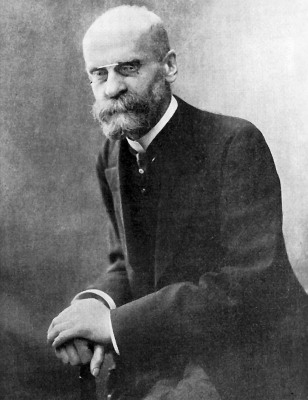
Restitutive sanctions , on the other hand, emerge in modern societies with organic solidarity —complex and diverse societies where people depend on one another precisely because they are different. Here, justice aims not so much to punish as to repair the damage and restore balance between the parties. This is the logic found in civil law. This separation is not merely conceptual but refers to two opposing ways of understanding the relationship between the individual and the community, between guilt and responsibility.
Indigenous Societies: A Third Possible Way
It is precisely here that the punitive practices of indigenous societies offer a surprising contribution to the debate. They cannot be easily pigeonholed into either of Durkheim's categories. Let's take a concrete example. In some indigenous populations of Latin America, those who commit murder are neither expelled from the community nor imprisoned. Instead, they are forced to support the victim's family for ten years.
This isn't just financial compensation: it's a profound symbolic gesture, re-establishing bonds broken by violence and restoring continuity to the social fabric. Another significant case involves some indigenous communities in the Yukon, Canada, where the practice of sentencing circles has been adopted : the offender is exiled to an island for a predetermined period, not to punish them but to give them time to reflect and regenerate before returning to the community in a renewed state.
In both cases, a radically different logic emerges from the Western one. Indigenous punishment does not aim to separate the perpetrator from the group, but to re-establish broken relationships . It is not vertical—imposed from above by a state with a monopoly on legitimate force—but horizontal, relying on the community's collective memory and wisdom.
From a Durkheimian perspective, we could say that these practices seem to embody a third form of social cohesion : one based neither on similarity (mechanical solidarity) nor on function (organic solidarity), but on what Axel Honneth calls social esteem : a community's ability to recognize each person's contribution to collective life, including those who have broken the bond. A bond that holds communities together not by force or contract, but by emotional participation in the condition of others.
A justice that mends instead of cutting
Let's try to think together about what these reflections tell us today. The Western model of criminal justice—based on punishment as the separation and neutralization of the guilty—is often taken for granted as the only possible one. But it is neither universal nor neutral. It is the product of a specific worldview that privileges the abstract individual, the certainty of the norm, and the state as a universal form of social organization and holder of the monopoly on legitimate violence. Indigenous practices show us that it is possible to think of justice differently, not as a mere act of elimination, but as a process of reparation.
This doesn't mean romanticizing indigenous societies, nor denying their internal contradictions. Rather, it means using them as a critical mirror to examine our own. At a time when the debate on restorative justice is gaining traction in Europe—from penal mediation to reintegration programs—the questions raised by Durkheim and indigenous experiences are far from obsolete. Ultimately, the question isn't whether to abolish punishment, but whether we are capable of thinking about justice not only for those who err, but also for those who remain. Not to focus solely on Cain, but to remember those who help Abel.
Gabriele Ristallo
References
- Durkheim É. (2016). Lectures on Sociology. Towards a Just Political Society, Naples-Salerno, Orthotes.
- IILA (2004). Identity of Indigenous Peoples: Legal, Anthropological, and Linguistic Aspects, Rome, IILA.
- Durkheim É. (1893). De la division du travail social, Paris, Alcan. [trans. it. The division of social labor, Milan, Edizioni di Comunità, 1962].
- Honneth A. (1992). The Struggle for Recognition: Proposals for an Ethics of Conflict, New York: Oxford University Press, 2002.


