

























In the last installment of this column on the epistemology of the social sciences, we addressed quantitative methods . For this final installment, we instead consider qualitative methods, which are in many ways antithetical to the previous ones discussed. For a critical comparison of these methods, I refer you to the previous article.

These are research approaches that, like quantitative ones, involve specific methods and techniques aimed at understanding social reality. However, qualitative approaches are the legacy of disciplines related to sociology, such as anthropology or ethnology, which cannot ignore a research approach that aims to delve deeper into the essential characteristics of the phenomenon being studied. While we will first examine the phases of research adopting qualitative methods, we will then move on to a critical analysis, offering some considerations on the merits and demerits of these approaches. Finally, to close the circle, we will conclude with the possible integration of these methods within the same research project.
Qualitative methods: the phases
While the primary objective of quantitative research is to quantify social phenomena, that is, to translate them into intelligible numbers through processes that convert empirical information into aggregate data, qualitative research lacks this aspect of quantifying the phenomenon, as well as (implicitly, but it's worth remembering) generalizing the results to the population studied. Thus, research adopting qualitative methods and techniques will have a different objective—that of depth—which will require less technically sophisticated but more subjectively nuanced research approaches. This means that the researcher will bear greater responsibility, as he or she will be responsible for interpreting and guiding, step by step , the entire research process.
Furthermore, while still emphasizing the differences between the two studies, we can say, referring to the metaphor often cited by Corbetta , that quantitative methods construct a "map" of the characteristics of a society as a whole, as a whole. Qualitative methods, on the other hand, delve into various aspects of this map, various "zones" or "areas," which are nevertheless still fractions of the entire complex that is society, at a more or less significant level of depth.

Description of the research process
But let's now move on to describing the qualitative research process, continuing with the example given for quantitative research on youth participation in politics. First of all, the first step in delving deeper into this phenomenon is common with quantitative research; in fact, a thorough literature review is a prerequisite for all research, regardless of its purpose or focus.
The process of gathering information already discovered and "discovered" by previous research is preliminary to any type of research because it allows us to access concepts, approaches, and insights that shed light on areas we, as researchers, may not have previously considered. Furthermore, this is crucial to avoiding generating and reviving research that has already been conducted by others and would be pointless to repeat. However, this repetition is sometimes beneficial to the scientific community if it is conducted judiciously, that is, if its repetition can be fruitful on a comparative level, both in time and space.

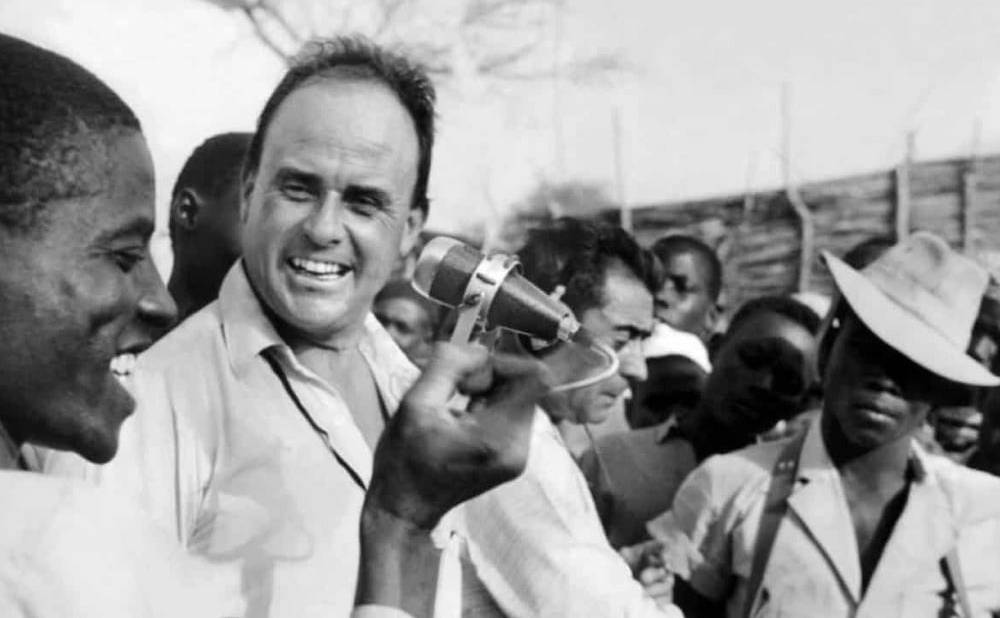
So, referring to our example, the first thing to do is to study the most authoritative qualitative empirical research that has been conducted previously. Low-level structured interviews, in-depth interviews, life stories and life histories , and analysis of various documents (such as youth newspapers, association brochures , billboards and other advertising materials, photographs, etc.) are examples of some of the specific qualitative research techniques. We will discuss them later.
The research design
The second step is research design, which in qualitative research requires a strong inductive structure ( remember? This step came at the end of quantitative research...). This means that the logic of traditional Popperian research is, so to speak, "reversed" in favor of data surfacing from the field ( field theory , or, if we really want to explicitly refer to it, Glaser and Strauss's grounded theory ). But how do we collect data if, as is standard practice in quantitative research, we no longer use questionnaires? To this end, a series of tools will be needed to gather information as scientifically as possible, without however mirroring quantitative approaches; that is, to understand (as we saw in the first article) the nature of the phenomenon in question by delving into it in depth.
Thus, returning to our example, one possible data collection option is to conduct qualitative, unstructured interviews, questioning stakeholders about their political preferences, attitudes, beliefs, habits, and so on. Unlike a standardized questionnaire—that is, with the same questions for everyone, with no possibility of interaction with the interviewer, where the questions are decided a priori by the researcher—the qualitative interview, with its lesser degree of structure, leverages those aspects of interactivity that are absent or less present in quantitative interviews.

Thus, for example, a young person could be asked if they are satisfied with current Italian politics, without (as is the case with a questionnaire) providing a scale on which to enter their level of satisfaction. Indeed, thanks also to the possibility of interaction, the interviewee's perspective can emerge, since the "leading question" can bring into play other dimensions of the youth-politics relationship, such as political communication, the language of certain politicians, the impact of the political system's outputs on young people (or at least how they are perceived by this social group), and so on.
Interpreting the data
Regarding data analysis, the next step in the process, once the data has been collected via video recorders for interviews, the documents have been catalogued and arranged according to a common criterion, various notes emerging from the interviews (even though a tape recorder is more frequently used), etc., the most challenging task for the qualitative researcher is the substantive interpretation of this jumble of information (it is clear that, to meet the scientific criteria required by the community, the greater the amount of information analyzed, the greater the depth of understanding of the phenomenon in question). This, as you can see, represents the largest portion of the work the researcher must undertake, as this work of analysis, comparison, and reflection consumes time and resources, as well as, naturally, energy.

In this sense, research aiming to understand young people's attitudes toward politics will need to review numerous interviews and various documents described above, including newspapers, photographs, online blogs, and so on, and then extract from these data the most important elements the social researcher deems appropriate. This is by no means a simple task, easier said than done, as some of these studies are time-consuming and cannot be replicated within a few years. This depends on the investments made in research, and in this particular area of research—social research.
The final point, which follows the interpretation of the data, helps ensure that the research conducted can enrich the scientific community's literature through the production of reports, scientific articles, books, manuals, and anything else that contributes to the development of knowledge about a particular sector of social and political reality (in this case, youth participation in politics). All of this is done without prejudice to methodological transparency, meaning a detailed description of how the research was conducted: the literature considered, the techniques adopted and their justification, the size of the sample of interviewees, etc.

Finally, to summarize, here is the sequence of the logic of qualitative research, similar to quantitative research, but with serious differences in the specific techniques used, and despite the methodological pluralism present in qualitative research, which can be traced back to the following typical steps.
- Literature review;
- Data collection “in the field”;
- Data Analysis;
- Data interpretation.
Qualitative methods: critical considerations
The inherent weakness of this approach, which relies on qualitative methods, is not only found in the alleged lack of objectivity it is often accused of. Rather, it is worth noting the difficulty of reconciling the generalization of results with the objectivist scientism that seeks their universalization through a process of inference. This problem is significant. The entire framework upon which science is based is nothing more than an epistemological legitimation of what humans have to say about reality. Abandoning this objective means, on the one hand, contributing to the widening of the gap between "hard" sciences (which use hard data ) and "soft" sciences (which use soft data ). On the other, it means progressively delegitimizing the scope and value of scientific knowledge.

This shouldn't discourage us from using qualitative methods, however. It's important to highlight their eminent utility. For example, we might point to the fact that only through these types of methods and specific techniques can researchers delve deeper into aspects of social reality that statistics overlook. It's no coincidence that phenomena like clandestine migration can be investigated with techniques like participant observation or in-depth interviews, thus allowing for the emergence of knowledge that isn't captured by statistics, given the status of an illegal migrant. These tools enable the process that, following the metaphor cited in Corbetta , turns the "map" into an extremely detailed one.
A possible conciliation
Often, within the paradigmatic landscape of sociology, we find a pluralism, a multiplicity of perspectives, which immediately raises a question: how can such divergent views be reconciled within the same scientific community? As you may recall from the previous contribution, when we analyzed the notions of erklären and verstehen , here too it is my duty to attempt to provide a synthesis.

First, we must recognize at least three criteria for making an appropriate and scientific choice of research techniques: adherence to a specific paradigm, the characteristics of the object of study, and the resources available.
- As we've seen since the first episode, the two notions examined represent two paradigmatic opposites of current trends in sociology. However, it must be kept in mind that there are many facets within it. Let's take some examples of paradigms. Approaches that draw on positivism or its new version—neopositivism—such as the Lazarfeldian paradigm, will favor a research path that involves sample surveys, most likely after analyzing the literature based on official statistics, in order to explain their meaning. On the contrary, for a sociologist who approaches social reality with the Weberian paradigm, he will have to use techniques that include field observation, whether participant or not, which allows for understand the point of view of the actors involved.
- As for the characteristics of the object of study, it depends on how and to what extent it can be analyzed. If we're dealing with cases of discrimination in the workplace, we can indeed make full use of quantitative methods to gauge the magnitude of its impact on a particular segment of the population, but that may not be enough: are we sure we've also identified those cases of discrimination that are normally not reported for fear of retaliation, shame, fear, or simply because it isn't "defined" as such by the actors themselves? In this case, qualitative methods such as participant observation come in handy, allowing for greater depth in the analysis. comprehension of the phenomenon.
- Some research techniques are simpler to implement and cost less, others are more complex and take up more time and resources, therefore they are burdensome on the budget available. It's not always easy to reconcile these needs with scientific accuracy, interest, and accuracy. For example, with regard to sample surveys, thanks to new technologies for data collection, processing, and storage in large databases, it's possible to handle large amounts of data quickly and with relatively little resource expenditure. Conversely, participant observation requires time to gain acceptance from the group being studied, is a prolonged practice, can be risky or ethically questionable, etc. Therefore, we've learned that ideally "perfect" research, free from fundamental issues—ontological, epistemological, and methodological—is very rarely achieved.

In conclusion, we can say that these two polar opposites are reconciled when, following the three criteria mentioned above, one brings together one's own mindset – the studying subject –, the characteristics of the phenomenon of interest – the object studied –, and finally (not to be underestimated, otherwise one won't get anywhere!) the resources available – time, funds, work, collaborators, etc.
Bibliography:
- By Uncle S., Agustoni A., Maretti M., Research methodology, Milan, Einaudi, 2012.
- Corbetta P., Social research: methodology and techniques. See The reference paradigms, Bologna, il Mulino, 2003.


