








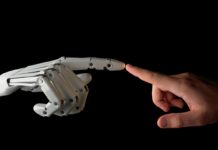











Manuel Castells is a Spanish sociologist, now a professor of Communication at the Annenberg Center at the University of Southern California. In " Internet Galaxy ," an essay published in 2001, he analyzed the changes that the Internet, the network of networks , has brought to society. His intention was not to make a prediction for the future: we will do that by analyzing his studies.
Internet: from its origins to today

The origins of the Internet can be traced back to the birth of ARPANET , a computer network established in September 1969 in the USA by ARPA (Advanced Research Projects Agency) . It was created in 1958 to expand and develop research, especially in the wake of the technological overtaking of the Soviet Union. From that moment to today there has been a tremendous evolution. The birth date of the World Wide Web is commonly given as August 6, 1991, the day on which the English computer scientist Tim Berners-Lee published the first website. The Web is the main service of the Internet. Today we have arrived at Web 4.0 . From the change the author had mentioned, we have arrived at artificial intelligence , technologies capable of reproducing augmented reality and big data. Not bad!
The changing global economy

The third chapter of the essay touches on the impact of the Internet on the economy . Large companies must change their way of thinking and adopt the Internet into their cultural landscape. Nokia, for example , has transformed its structure and become an exponential organization , based on creativity combined with technology. These types of organizations are introducing cloud systems, algorithms and big data, social media, and artificial intelligence. Not to mention many startups like Yahoo, Google, and Amazon , which have revolutionized the entire world. We have arrived at e-commerce; we buy almost everything online on marketplaces and e-commerce sites in physical stores. If we don't buy online, online advertising leads us to want something we saw on our mobile devices. In modern society, consumers are also becoming prosumers , actively participating in the production process of a good or service. Furthermore, consumers are the main focus of marketing techniques 4.0, from purchasing decisions driven by Google to becoming ambassadors for a product even offline. The economy first passes through the Internet to arrive directly in our homes.
Virtual communities

The concept of community has been considered very often in sociology . A community is a group of individuals who share the same physical and technological environment, forming a group recognizable by shared values , language , and traditions . With the advent of the Internet, there has been a need to distinguish between online and offline communities. Individuals are able to have a new , completely different online identity . This is possible thanks to social networks . The essay discusses several studies that have demonstrated the negative influence of new technologies on daily life, highlighting in particular a decline in personal relationships and an impoverishment of language. At the same time, other studies have highlighted the reduction of geographical barriers thanks to the use of social networks. You can talk to anyone, anywhere. " But talking doesn't necessarily mean communicating ." Online communities are increasingly developing thanks to social networks and are almost indistinguishable from real-life ones.
Politics and the Internet
 In the fifth and sixth chapters, the sociologist analyses very carefully the relationship between the Internet and the policy. "Internet and social networks can govern politics”Thanks to the Internet, information does not allow for "secrets" so politics becomes accessible to everyone. In particular, today, Twitter It is the social network that allows politicians and voters to communicate and therefore breaks down barriers.The paradox is that even politics can control the Internet“. The case Cambridge Analytica It's the epitome of all this. We all know that Facebook sells our data. Cambridge Analytica is one of the many companies that buys this data. This company is said to have had dealings with Facebook's employees. Trump, during the 2016 US elections. The suspicion is that propaganda was made against Hillary Clinton and in favor of Trump using this data. Probably this Castells He didn't expect it... These are just some of the aspects that the sociologist analyses in his essay. It should be emphasized that he didn't make predictions about the future but understood exactly which points would undergo a evolution-revolution with the advent of the Internet. The term “Galaxy" He well describes the Internet and its many facets. He certainly had foresight, but even he didn't expect us to become an integral part of this Galaxy.
Barbara Petrano

Sociology taught me how to think, and writing helps me express my ideas. I have a degree in Digital Cultures and Communications and am passionate about digital marketing.


