


























The world has changed, or rather, our perception of it has. What worried us yesterday now seems meaningless. What matters the many lives lost in a world that, having run out of seats, now seems to offer no standing room? What matters the precarious lives of those who no longer have a life? Terrorism always diverts people's attention from everyday and political problems to horizons of death.
Islam in the Time of Terrorism
Once upon a time, a long time ago, when fears were different and the world seemed different, it was said that terrorism was always reactionary, because it was so in its social and political consequences. If in the last century terrorism was colored the grim black of those who organized massacres or the bright red of those who planned to overthrow the elites , today's terrorism is uniquely black. Black with white writing, in a language very few can read, even though experts assure it contains the name of God. And even the strategy is the same: to target workers, ordinary young people, families, ordinary inhabitants of Eastern and Western countries, certainly not the elites. Decidedly, pitch-black terrorism. And God definitely has nothing to do with it.
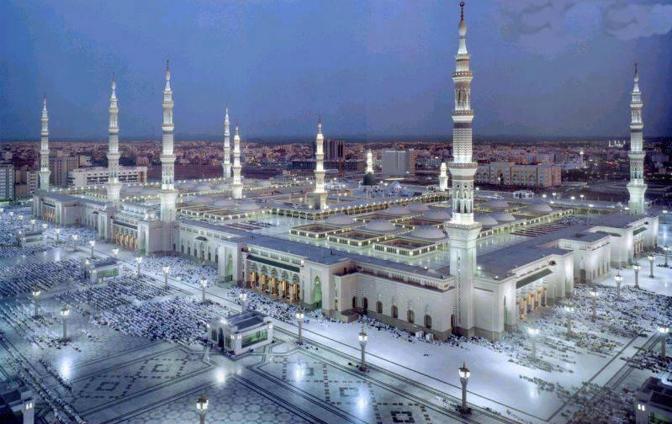
Islam prohibits such violence in both its principles and its rules. Some, to demonstrate the inherent belligerence of the Quran , extract excerpts from the context of Medinan suras (from the period of exile in Medina, due to persecution, with intense conflict between cities and tribes), where the call for the need to respond to attacks refers to the specific historical situation. The ethics of war are a code of chivalry, so much so that the bearded cutthroats on the monitors look more like "unbelievers" from the Quran than true Muslims. All this is called "radical" Islam or "fundamentalism," a word that has nothing to do with the foundations of the religion.
The Degenerations of Islam
Finally, even on our talk shows, self-styled experts whose training we are not given to know are able to distinguish Islam from its degenerations: Wahhabism and Salafism . While they disagree on some aspects—such as the question of so-called "innovations"—they certainly have in common what in Arabic is defined as " takfiri ": the tendency to condemn in a sectarian manner those who do not belong to one's own group, depriving them of the rights that religion recognizes for human beings and, often, even animals.
Salafism, which harks back to the purity of the "salaf" (first apostles of the Prophet), was founded by Ibn Taymiyya (13th-14th centuries) as a reaction to the Mongol invasion, which introduced foreign traditions and customs, generally related to shamanic animism. A revival arose in the 19th-20th centuries as a result of European colonialism. Salafism and neo-Salafism can be considered reactions to territorial and cultural invasions.
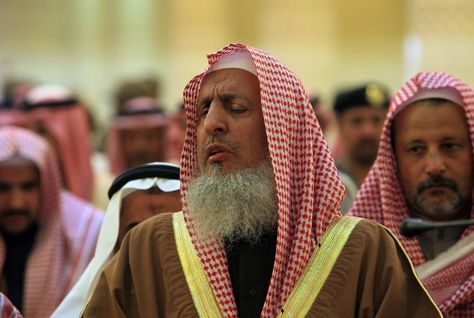
Wahhabism was founded by Muhammad ibn Abd al- Wahhāb (18th century), a dogmatic and pharisaical doctrine in support of the nascent hegemony of the Saud dynasty. Foreign powers interested in uniting the Emirates favored the school's spread. Wahhabism is today the official doctrine of Saudi Arabia, inspiring the peninsula's madrassas.
Daesh 's current extremism integrates these two positions, born of political interests rather than theological speculation, propagated in the thunderous simplification of decrees by Wahhabi muftis or pamphlets inspired by Ibn Taymiyya and S. Qutb. Only a small fraction of those who embrace them resort to physical violence, but violence feeds on these ideologies.
What future?

Foreign Fighters are often children of immigrants who grew up here. Uprooted, sometimes economically disadvantaged, closer to the myths and values of rap culture than to religion, often with a history of drug dealing and crime. This is undoubtedly the defeat of Europe, which has failed to integrate with respect for its own and others' cultures, the bitter fruit of a past of colonization and exploitation, later transformed into the exploitation of the working classes, plunged into the despair of economic hardship.
For now, the major Islamic communities in our country have renounced terrorism and the culture of death, but they should now reflect on the culture that generated them, clearly distinguishing it from the principles of their own religion, not only in its nefarious effects but also in its insidious presuppositions. They should consider the ideological foundations of the division and violence from which believers must free themselves. A historical, sociological, and philosophical reflection is up to them and all of us.
Barbara GV Lattanzi


