

























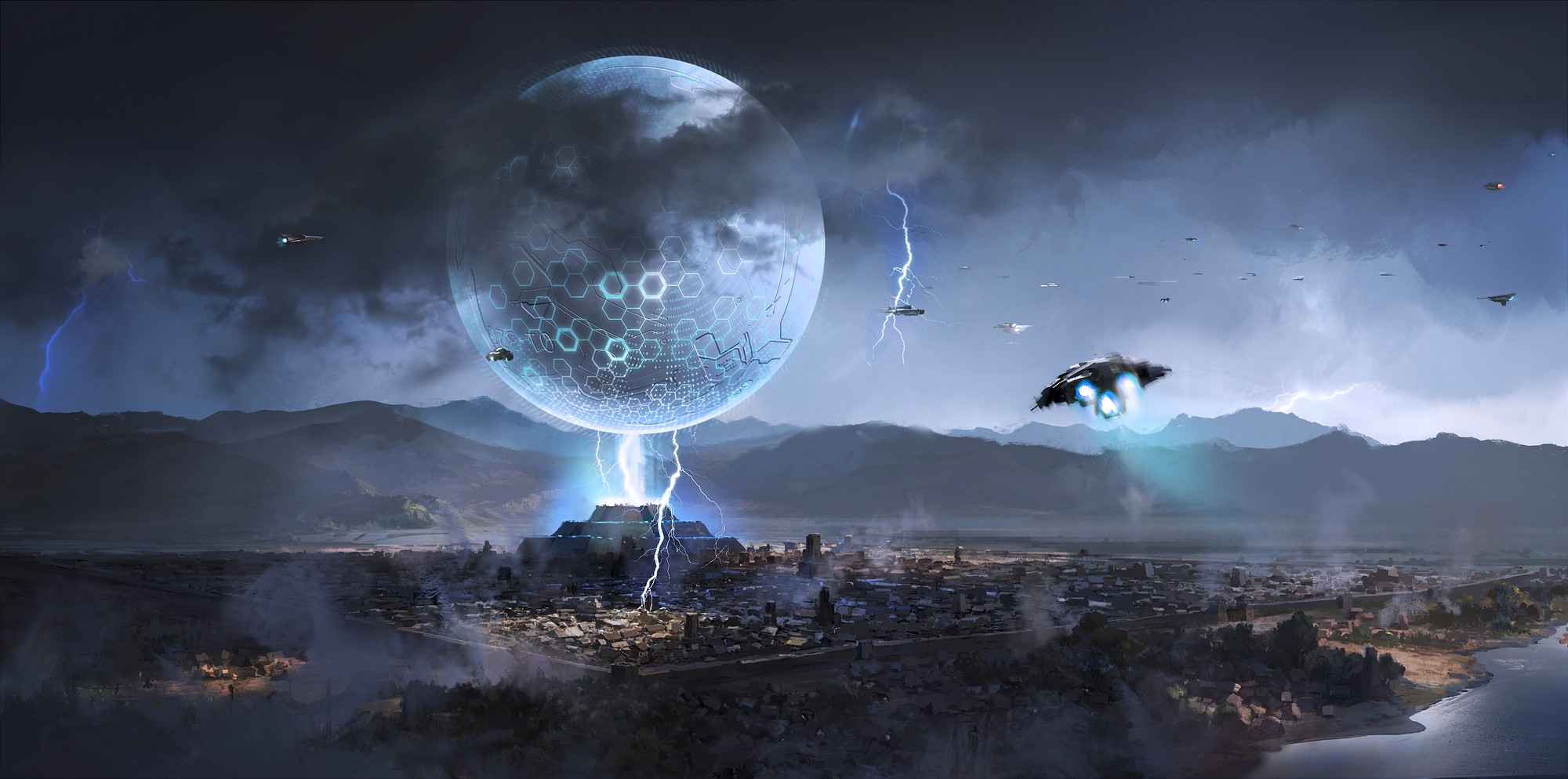
Science fiction (SF or sci-fi) is a narrative genre—literary, cinematic, but now also video games and TV series—that imagines future or alternative worlds based on reflections on science, technology, and their social implications. At its core, as Baudrillard (1980) notes, are questions regarding technical progress, political control, and the crisis of human identity. Science fiction, oscillating between utopias and dystopias, offers a unique lens through which to dramatize the tensions of contemporary society.
To fully grasp its significance in mass culture, it is necessary to reconstruct – even briefly here, in this second article – its historical development, following the forms it takes in the media and its role as a device of social criticism.
Sociology and history of science fiction
The origins of the science fiction genre date back to the 19th and 20th centuries, in a climate of strong faith in scientific progress and the ability of technology to transform the world. Mary Shelley's novel Frankenstein (1818) is often taken as a starting point, a work that introduced themes that would become central to science fiction: the transgression of the ethical limits of science, the figure of the "creative" scientist, and the idea of the post-human . Victor Frankenstein, by assembling and reanimating body parts using electricity, stages a profound reflection on the responsibility of research and the risks of knowledge unfettered by moral constraints.
In the following years, authors such as Jules Verne and H.G. Wells helped shape the genre. Verne, with novels such as Twenty Thousand Leagues Under the Sea (1870), explored the possibilities of scientific travel, technological exploration, and inventions that reached beyond the present. Wells, on the other hand, took a more critical approach, as in The Time Machine (1895), which was both a tale of time travel and a reflection on class inequality and the dehumanizing effects of industrial capitalism.
Modern science fiction for Fattori
Adolfo Fattori (2001) recognizes Verne and Wells as the true founders of modern science fiction: for them, technology is both an instrument of emancipation and a potential vehicle of oppression. The future becomes a narrative space into which to project the desires and fears, hopes and anxieties of the present. From this perspective, science fiction is configured as a "particularization of the imagination" (ibid., p. 19), committed to exploring the tension between utopia and dystopia.
Authors such as Aldous Huxley and George Orwell radicalize this dimension, offering dystopian visions that embody specific political and social fears. Fredric Jameson (2005) instead insists on the close relationship between dystopia and utopia: even when describing the worst, dystopian narrative keeps alive, in filigree, the possibility of imagining another world (ibid., p. 37).
Recurring themes in science fiction
Among the recurring themes in science fiction is the encounter with the Other, often depicted in the form of aliens or artificial intelligence. Through this radical otherness, science fiction can interrogate power relations, racism, and colonial logics, making the alien a metaphor for the different and the uncanny (Brugo, Ferraro, 2008). A clear example is the film District 9 (2009), in which aliens are confined to South African ghettos, a transparent allegory of apartheid.
The encounter with the other
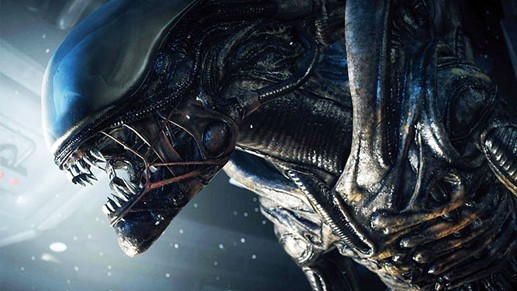
In Orientalism , Edward Said (2013) shows how the construction of the Other often serves to legitimise practices of cultural domination and control; with the figure of the alien the distance is taken to the extreme: the xenomorph of the Alien saga , eyeless, with acid blood and a body profoundly alien to the human model, represents an absolute "other-than-us", which eliminates any possibility of empathy (ibid., p. 193).
The ambiguous role of technology
Another distinctive feature of science fiction is the ambivalent role attributed to technology. On the one hand, it appears as an engine of progress, a promise of improved living conditions; on the other, it is depicted as an instrument of domination and control (Fattori, 1980).
Fritz Lang's Metropolis embodies this ambiguity well: the great technological city is a symbol of modern splendor, but also a place of exploitation and inequality. Herbert Marcuse (1999) warns of the link between technology and the maintenance of the status quo in advanced industrial societies: if not critically governed, it risks turning into a force of alienation.
Worldbuilding
Sci-fi also excels at constructing complex worlds, known as worldbuilding . By creating neologisms, novel social systems, and environments radically different from everyday reality, authors manage to address themes that realistic fiction would struggle to represent.
Frank Herbert's Dune series (1965) is a prime example: in a desert universe, the author addresses issues related to ecology, politics, religion, and resource management. Umberto Eco (1979; 1985) notes how world-building offers a privileged space to explore speculative scenarios that broaden the conceptual depth of the narrative.
Science fiction to understand contradictions
In this regard, Darko Suvin defines science fiction as "literature of alienating cognition" (1985, p. 37): the element of alienation, which can be spatial or temporal, allows us to distance ourselves from the present in order to observe it critically (ibid., p. 41). In this light, science fiction is not so much an escape from reality as a way of understanding its contradictions.
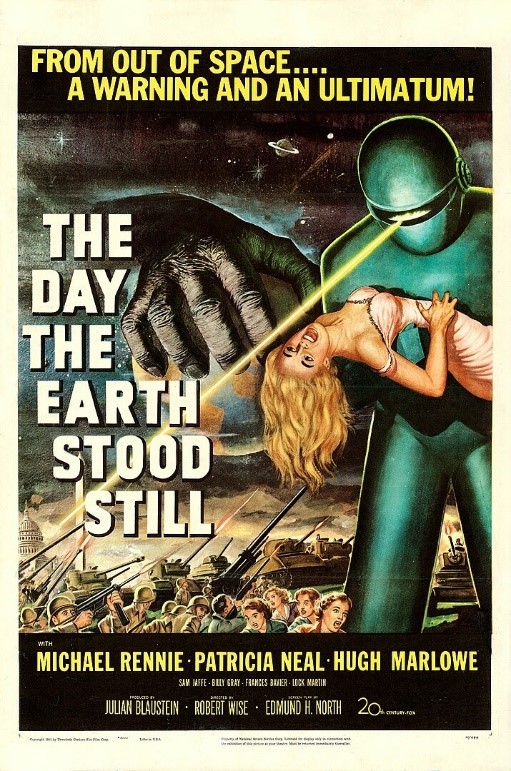
During the Cold War, numerous science fiction films reflected the climate of fear linked to the nuclear threat and the possibility of invasion (Caramiello, 2016). The Day the Earth Stood Still (1951) is a case in point: the visit of an alien who warns humanity of the risks of nuclear conflict becomes a transparent metaphor for the geopolitical tensions of the time.
Science fiction in video games
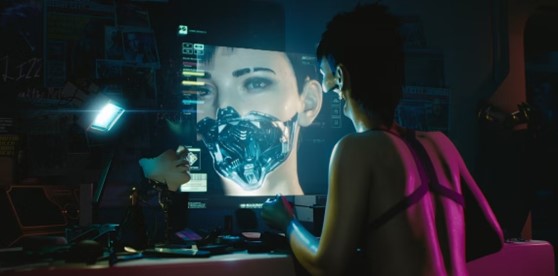
As we enter the 21st century, science fiction is being profoundly reshaped by the emergence of digital and interactive media. Video games, streaming series, and transmedia narratives are expanding the scope and modalities of its consumption. Video games, in particular, offer interactive experiences that allow players to directly inhabit future and dystopian worlds. Titles like Detroit: Become Human , Mass Effect , Cyberpunk 2077 , and the Horizon saga combine high visual and narrative complexity with the ability to make moral choices that influence the plot's development.
Interactive narrative engages players in new ways, making them active participants in worlds marked by technological progress and new forms of inequality (D'Ambrosio, 2019). In Cyberpunk 2077 , for example, themes such as the pervasive power of megacorporations, technological alienation, and the fusion of man and machine emerge, which hark back to digital capitalism and discourses on transhumanism.
At the same time, television series are reaffirming their central role in the development of science fiction themes. Black Mirror represents perhaps the best-known case of contemporary technological dystopia: each episode depicts a near-future, often disturbing, in which technology amplifies problems already present in our daily lives. Surveillance, social control, social media addiction, and virtual reality are just some of the issues addressed. As Bennato (2018) observes, the shift to visual and interactive media has multiplied the genre's ability to impact the collective imagination, blurring the boundaries between entertainment and critical reflection.
References
- Baudrillard, J., Science Fiction and Simulacra, in Russo, L., Science Fiction and Criticism. Texts of the International Conference of Palermo, Feltrinelli, Milan, 1980;
- Brugo I., Ferraro G., Humans Anyway. Behind the Figures of Monsters, Aliens, Orcs, and Vampires, Meltemi, Rome, 2008;
- Caramiello L., The Nuclear Medium: Cultures, Behaviors, and Imagination in the Atomic Age (new edition edited by Vito Marcelletti), Libreriauniversitaria.it., Padova 2016;
- D'Ambrosio F., The interactive narrative of Detroit: Become Human™ and the ethical-political definition of the contemporary individual, H-ermes, J. Comm. 14 (2019), 19-20 ISSN 2284-0753, DOI 10.1285/i22840753n14p19;
- Eco U., Lector in fabula, Milan, Bompiani, 1979;
- Eco U., The Worlds of Science Fiction, in On Mirrors and Other Essays, Milan, Bompiani 1985: 125-146;
- Fattori A., Memories from the Future: Space, Time, and Identity in Science Fiction, Naples, ipermedium, 2001;
- Jameson F., Archaeologies of the Future: The Desire Called Utopia and Other Science Fictions, Verso Books, New York, 2005;
- Marcuse H., One-Dimensional Man, Einaudi, Turin, 1999;
- Said E., Orientalism: The European Image of the Orient, Feltrinelli, Milan, 2013;
- Suvin, D., The Metamorphoses of Science Fiction, Il Mulino, Bologna, 1985;

Lecturer in Communications and HR Management. Journalist with a degree in Sociology (cum laude). Editor-in-Chief of Sociologicamente.it.
PUBLICATIONS | LINKEDIN


