
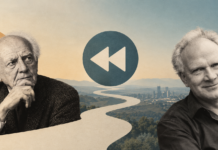



















Michel Foucault 's almost obsessive and obsessive attention to the study of power and social control in sociology was certainly one of the French philosopher and sociologist's most notable contributions to the in-depth analysis of the dynamics surrounding these phenomena. The concept of biopolitics , in fact, represents its most complete expression. Who would have imagined that such an unusual semantic juxtaposition would be scrutinized by a scholar who, while a philosopher in his own right, was also internationally recognized as a sociologist, and who is still found in sociological theory textbooks? This article, whose brevity will not allow us to fully explore the concept under examination and naturally does not claim to exhaust, even in broad terms, the philosopher's thought, aims to provide the reader with a brief illustrative introduction that can account for the enormous work carried out by Foucault regarding the analysis of " power devices " (as he preferred to call them), as well as his figure contextualized in the paradigmatic framework to which he belonged.
Life and works
Michel Foucault was born in France, in Poitiers, in 1926. During his life he taught in Clermont-Ferrand (1964-68), in Vincennes (1968-70) and, finally, at the Collège de France in Paris, from 1970. He died in 1984. He defined himself as an “ archaeologist of knowledge ”, because he wanted to restore in depth what a culture has outlined as a caesura between the dimension of raison and that of deraison 1.

His immense works of historical reconstruction of the creation of knowledge include: Histoire de la folie à l'âge classique (1963); Les mots et les choses, une archéologie des sciences humaines (1966), his consolidated masterpiece; and finally, we recall Surveiller et punir; naissance de la prison (1975), which focuses on the concept of social control within institutional structures such as detention facilities. These works, of enormous historical interest for any scholar wishing to approach his thought, touch on themes that overall revolve around a critical reflection on the nature of power and its practical implications in the daily life of the individual. But, as we will see, he seriously questions the "classical" conceptions of power, that is, those that refer to the "sovereignty" of the State ( imperium ) or, in other words, to those conceptualizations of power as something to be investigated at a macrosociological level of analysis.
The concept of "biopolitics" between the individual and society
Biopolitics is not only a "slippery" concept 2 , but above all it arises as a hybridization between two essential dimensions that constitute associated action. These two dimensions concern life ( bios , in Greek), from which the "discourse on life" – biology – derives, and politics (from polis , in Greek). Although difficult to pinpoint, this concept has made its fortune in the works of Foucault, who, using it to explain the interconnection (and intermingling) between the individual and society, or rather, between the private and public spheres, has ended up generating dilemmas among the interpreters of his thought. What is certain is that Foucault was not the only one, nor the first, to address and utilize this concept. Before him, several authors had already moved forward using similar concepts, or similarly through similar intuitions; thus we can find “ biocracy ” already in Comte or the dazzling intuition of the “ will to power ” in Nietzsche, which contribute to formalizing the complex relationship between life and political power 3.
From these works, Foucault explores the "reticular" aspects through which power manifests itself, as a means of irradiating bodies by state power. To cite an empirical reference for his theory of power and the concept of biopolitics, for example, we find compulsory vaccination; or (where it is still legally enforced) when the state arrogates to itself the right to decide on the life and death of a member of society: we are talking about capital punishment. In short, through these examples, it seems that the concept of biopolitics is further substantiated as a cognitive tool for empirically linking power relations between the social and the individual, between the state —understood as the organization of social organizations —and the members of the state community.

Final houghts
In conclusion, faced with a colossal figure of twentieth-century thought like Foucault, who bridges the various humanistic disciplines, one cannot fail to recognize his status as a multidisciplinary thinker. Foucault's eclecticism , in fact, allows us to identify a meeting point and, at the same time, a crossroads between the specialism of the juridical and prescriptive analysis of power, the highly formalized language of political science, and the structuralist matrix of the philosopher's "knotted" thought. These three elements work together to link the analysis of "power apparatuses" to the concept of biopolitics. The Poitiers philosopher, although he eschews the subjectivism of so-called Rational Choice approaches , strives not to undermine the effort made by his system of thought to identify a "barrier," a sort of "armor," to defend the individual.
For this reason, Foucault is often remembered by critics as the "champion" of the individual, always ready to rush to his defense from the abuses of power that society coercively imposes on him; so much so that Jürgen Habermas questioned him about the concrete possibility that an individual like Foucault himself could emancipate himself, as he believed he could, without considering his structuralist approach – although he has stated in several interviews that he does not adhere to this paradigmatic current, thus distancing himself from it –, a contradiction that, perhaps, undermines the internal coherence of his thought. This does not take away, however, the fact that the meaning of the concept of biopolitics is widely discussed by critics and experts in the field and has led to different interpretations by scholars of his system of ideas 4.
Bibliography:
1 See Livio Sichirollo in the Treccani Encyclopedia , under the entry Foucault, Michel.
2 See Roberto Esposito in the Treccani Encyclopedia , under the entry Biopolitics.
3 Ibidem.
4 Cfr. Alessandro Pandolfi, Introduction. Foucault: Political Discourse and Philosophy.


