



















Tracing the foundations of a highly complex phenomenon like capitalism is by no means a simple task. Although various interpretative currents have developed around the concept of "capitalism," no one, perhaps, has gone as far as the German sociologist Max Weber regarding its genesis . He ventured a rather unlikely connection between economy and society that, at first glance, is unlikely to be expected. Rather than between economy and society (which still remains a rather general pair of categories), in Weber's work, we should refer to the connection established between economic phenomena (such as capitalism, precisely) and phenomena relating to the religious sphere (pertaining to the social dimension), as we will see later.

Capitalism: A Definition
While Marx and the Marxists believed that the definition of capitalism was essentially a practical operation attributable to the antagonism between social groups—the capitalist bourgeoisie, which owns the means of production, and the industrial proletariat, which only owns children—Weber arrived at a definition that no longer relies on the production relations existing between these antagonistic groups, but rather focuses on the characteristics of the entrepreneurial action of the actor, the capitalist. This, as can be seen, is in line with his theoretical approach: methodological individualism.
Well, Weber arrives at the following definition of capitalism:
We are faced with capitalism where, in a production economy, the satisfaction of a human group is achieved through enterprise, regardless of the nature of the needs to be satisfied; and, especially, the rational capitalist enterprise is an enterprise that involves a calculation of capital, that is, a production enterprise that controls its output through calculation, thanks to modern accounting and the establishment of a balance sheet […].
(cit. in Rutigliano, Classical Sociological Theories , Bollati Boringhieri, p. 204)
As can be seen from this definition, the dimension Weber identifies is that of individual action and, moreover, that of the capitalist entrepreneur's perspective; unlike Marx, who favors a proletarian perspective. Furthermore, we must emphasize the most characteristic aspects of the concept of capitalism that emerge from this definition.
So, first of all , we find a strong focus on satisfying needs, the driving force behind any economic activity, which, according to Weber, is no different from any other activity geared toward generating wealth (in other words, it's not this or that need to be satisfied that determines economic activity to meet these or those needs; after all, entrepreneurial activity ranges from branch to branch with respect to the demand for goods or services); then, the "rational capitalist enterprise" defines the modus operandi of the entrepreneur and investments: the model is that of rationality : calculating, synoptic, incremental, etc. (it matters little whether this rationality is effective and efficient, at a later stage); As for capital calculations, particular attention must be paid, as the reader will have guessed, to the issue of accounting which, exercised through the company balance sheet, contributes to the life of the entrepreneurial activity which, to survive and withstand the shocks to which it is subjected by the market, must address problems objectively and cannot afford not to adapt easily to the external environment.

Weber's intuition
At this point, having outlined its nature, all that remains is to question the genesis of this phenomenon we have called "capitalism." Although capital appears to be a very recent invention in history (that is, within the last two centuries of history), it stems from behaviors that previously seemed to have nothing to do with the attitude, the unconscious futuristic projection, of the capitalist. This is Max Weber's intuition : according to his interpretative framework, the birth of capitalism is attributable to pragmatic behaviors that, however, have a religious basis; and which of the so-called universal religions has a behavioral framework of strong tension with the future, of redemption through one's actions in practical life?
Well, it is easy to notice that among the religions we know about, we are talking about Christianity in its Protestant variant – the Protestantism –, whose vision prescribes that to obtain redemption from God one must maintain a successful method of behavior in the workplace. Naturally, this is the interpretation that the faithful gave it. It is not possible to assert, sociologicamente speaking, that this is the true interpretation of Christian writings; rather, we can affirm that this was the position that the faithful had on the matter, one of the many interpretations that can be given to religious writings. For this reason, an attitude of deference towards the work as a vocation, which Weber calls with the term Job (German term indicating “profession as a vocation”). Job It was, we might say, a way for the faithful to discover their fate, a means of accessing divine will; in other words, whether man was damned or saved.
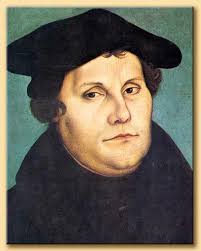
But what does all this have to do with capitalism? According to Weber, there is a connection between the actions of religious people, of believers, and that of work as "commitment," "dedication," and, ultimately, as a profession , as we have already said. This connection, according to the German sociologist, can be traced to the actions of believers who, unintentionally, developed a behavioral method suited to reinvesting the profits accumulated in their own businesses. In practice, this behavior allowed the actors to see in success (in profit) the light of their own redemption, salvation, and scrutiny of their own destiny, as God had intended.
In this type of action, Weber glimpses the genesis of what will later be rational behavior with respect to the ultimate goal: capitalist action , that is, the reinvestment of profits ad infinitum , is the type of action that will be truly characteristic of the capitalist. Herein lies Weber's fundamental insight: what seemed to be non-rational action, even if only apparently, is configured as consciously intentional action toward a goal that, in reality, has ended up generating feedback effects in other social spheres, such as the economic. We must delve deeper into this aspect; but not before commenting on the method.
The method: the theory of ideal types
So far we have investigated the process through which Weber arrives at the causal attribution – neither unilateral nor deterministic (of course, it is good to remind the reader who is not familiar with the author) – of his theory on the genesis of the capitalist phenomenon; now, it is time to explain in more detail Weber's work which, both in the Sociology of Religions , but above all in The Protestant Ethic and the Spirit of Capitalism , clarifies, with the transparency that distinguishes him as a highly respected scientist, the points (or factors) that favor certain social behaviors, such as the entrepreneurial activity of the capitalist.

The method used is one according to which, as Weber did throughout his research, the researcher constructs conceptual tools—called "ideal" types, or "pure" types, as he himself reiterated toward the maturity of his thought—that allow him to deduce the emergent properties that are most frequent and salient in empirical reality. In other words, starting from these " ideal types ," Weber rigorously defines the concept of "capitalism," as he did with the "Protestant Ethic," and from these definitions he identifies empirical regularities through which to systematize external reality, made up of complexity and chaos, elements that Weber takes firmly into account (and which, necessarily, condition his epistemological-logical apparatus, as well as, as anyone with a modicum of knowledge will notice, his methodology).
The connection between economy and religion
The context within which Weber's research takes place is the one described above: Weber provided a definition of capitalism, which we have carefully analyzed; following the researcher's interests, we have attempted to retrace the research process, connecting to the not insignificant scientific question of method; now, all that remains is to understand a little more deeply the nature of capitalism and its religious origins. The time has come to clarify the logical connection Weber identified between religion and economics.
Even if, apparently, the conduct of today's capitalist has nothing to do with that of an ascetic Protestant, we must understand why, originally, what appears to be a "futuristic projection" of the capitalist, as we called it above, has something in common with the attitude of a religious person. And, if this common element exists, what is it? Well, Weber, analyzing hundreds of documents relating to Protestant pastors and (let us keep this in mind!) their beliefs , identifies both the capitalists and the Protestant pastors and the faithful as having an attitude of honesty toward work ( Beruf ). According to his interpretation, this attitude originates from a condition, or psychological situation, of ignorance in which the believer finds himself. In practice, the believer, not having access to divine will, is led to want to know what God has in store for him, and this "will to know" has led groups of believers to believe, precisely, not what God had in store for the destiny of mankind, but rather that to discern the "signs" of God's will it was necessary to commit oneself hard and diligently to one's work ; and, coincidentally, many of the first entrepreneurs who developed the capitalist logic of profit from one's own work were of Protestant faith, as Weber himself observes.
So, as Weber himself specifies in his Protestant Ethic ,
The thirst for profit, the aspiration to earn as much money as possible, has nothing in itself in common with capitalism. This aspiration is found in […] all sorts and conditions of men , in all eras, in all countries of the earth […]. The immoderate lust for gain is not at all identical with capitalism, much less does it correspond to the “spirit” of it.
Capitalism can indeed be identified with a disciplining or at least a rational tempering of such an irrational impulse.
(cit. in Rutigliano, Classical Sociological Theories, Bollati Boringhieri, pp. 203-4)
From these considerations, it emerges that two phenomena that seem too distant to be compared (and yet Weber has received much criticism), the connection between the transcendent and the pragmatic dimensions appears, instead, to be closer than one might think. Indeed, all this is simply the result of the existential situation of Protestant believers who, unwilling to surrender to their fate—and, as Weber repeatedly reiterates in his theoretical apparatus: the human being is a being that creates meaning —give rise to beliefs, convictions, attitudes, practices, etc.; in a word: they create meaning.
Some clarifications
To proceed with caution, it is appropriate to remind the reader that Weber, faced with this phenomenon, had to consider at least two aspects, one easily summarized in the ceteris paribus method , and the other, related to the previous one, the method of subtraction of adequate causation . Although they seem to be placed on the same level, to interpret the birth of capitalism, the scholar had to resort to a historical-comparative analysis (hence the method of historical-social sciences, which frequently makes use of the historical-comparative method, at least in qualitative and diachronic research) that took into account the multiplicity of factors that can induce a particular socioeconomic context to give rise to this structure and mode of production: capitalism. But let's proceed in order.
The first method— ceteris paribus , all things being equal—consists in equating the conditions that would have favored various forms of capitalism. For example, Weber observes that even in the Chinese region, the conditions existed that, precisely as Weber had envisaged, could have allowed capitalism to take off. Yet this is a distinctly European and Western phenomenon, at least in its early stages. Technology was advanced, bureaucracy efficient, working conditions similar to those in Europe; yet there was no trace of capitalism (at the time) in China. What, then, according to the German scholar, allowed the capitalist mode of production to flourish and mature?
And here, we must return to the second expression we used—the subtraction of adequate causation— : among the multitude of factors that can explain capitalism, which of these is the most significant and significant determinant? Weber seeks the answer in religious behavior; indeed, in China, for example, the moral conduct described by believers belonging to the Confucian or Buddhist churches preaches an almost total detachment from the world. Clearly, having taken these considerations into account, Weber concludes that, regardless of the other factors that also contributed to the birth of capitalism, the institutionalization of this structure—capitalism—is due to, and largely determined by, the religious behavior of believers, especially those of the Protestant church.

Critical considerations
Last but not least, we must address the possible criticisms that have been received and that can legitimately be directed at the colossal Weberian study.
First, the sample : was it adequate? Can we assert with a sufficient degree of approximation that the letters of Protestant priests analyzed by Weber are a good starting point for reaching the conclusions he reached? In practice, we ask ourselves: can the sources used to conduct the study be considered reliable? Or, at least, can we generalize from those same sources to trace the evolutionary paths of such a complex phenomenon? Well, these are all questions we must ask ourselves, and, in all honesty, they are certainly not easy to resolve.
What we can say in favor of "our" Max—just to break a lance in his favor—is that he deserves recognition, perhaps, for the undeniable merit of having conducted research with excellent methodological transparency . It is this methodological transparency, in fact, that has made this and other research conducted throughout his life a highly renowned and respected social scientist; it cannot be said that his was an intellectual enterprise (this time non-capitalist) of little importance. For his part, Weber himself declared that it is the destiny of the scientist to be surpassed intellectually: "To be surpassed scientifically is—it bears repeating—not only our destiny, for all of us, but also our goal." This demonstrates the infinite and immeasurable humility that the scholar declared to his successors, soon to be called upon to undertake a new endeavor: that of deciphering the thought of their master, a benchmark for any social scientist.
Bibliography:
Enzo Rutigliano, Classical Sociological Theories , Bollati Boringhieri, Turin 2001.


