


























The railway is communication. Just like the train . Both are places of the mind, fertile spaces for the creativity of artists and the collective imagination. Both are part of a symbolic universe that has shaped our history. The wonder of these places and these puffing "steel monsters" has, however, undergone a series of changes over time that have diminished their " wow " factor. Let's try to understand which ones.

The railway as a narrative: the journey
Talking about travel by train and the role they occupy in the collective imagination, three terms come up again and again. Magic, charm and progressThe first two evoke evocative and rhetorical images. The third is very dear to historians and economists. Even in everyday language, we use terms from the railway world. Just think of the various "fast as a train," "going off the rails" (wrong track, theme), "taking the right train" (opportunities), etc. These short phrases show us how the imagery of the train has gradually entered our biographies. But why?
According to Giulio Sapelli, everything lies in the fact that
the railway has been and is a great cornucopia of creative imagination, an extraordinary intellectual and emotional adventure that invents itself every day (Sapelli, 1988).
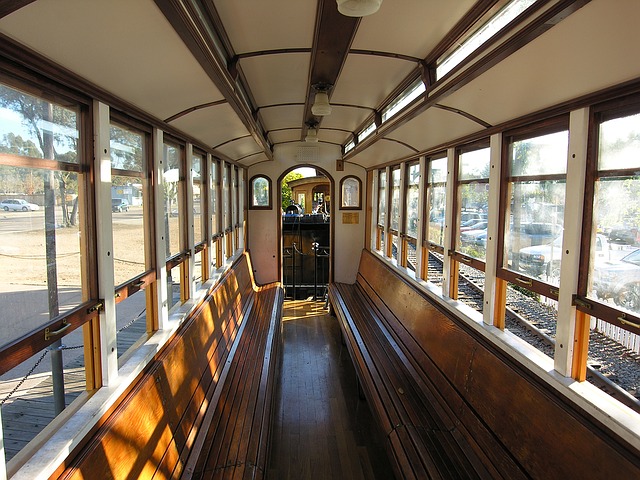
The railway is a narrative . By virtue of its nature as a communication system, it is a powerful engine of culture. It is a book that narrates infinite human experiences. And precisely because it is a metaphor for movement, it is also a metaphor for change. Travel, in fact, shapes and transforms identity . It is no coincidence, in fact, that the figure of the traveler is characterized by an extreme fluidity of identity and social ties.
Trains and Identity in the Cinematic Imagination
Identity during travel , beyond moments of reflection and catharsis, is constructed and materially mediated by the gaze through the window. Like a film , it presents us with ever-changing images, in constant transition. While on the one hand, a special relationship develops between us and the passing landscape, on the other, the window reflects our own image, like a mirror. The glass reflects the viewer's image, superimposing it onto the landscape and the compartment in which this visual experience is being lived. In this way, a system of visual overlap and co-participation is created. Throughout the journey, we become grafted with our own existences into the fluidity of the train's narrative.
This transitory existence, this intertwining of moving stories, has found fertile ground, especially in cinema. Every genre of cinematic representation has had, directly or indirectly, trains and railways as a place of intersection of experiences. Stories of life changes like Bread and Chocolate (1974) by Franco Brusati, starring Nino Manfredi as an emigrant, between melancholy humor and satire. Mysteries and murders, as in the case of the stories starring Hercule Poirot, Murder on the Orient Express (2017) and Death on the Nile (2020). But also Italian-style comedy, with historical scenes like in Amici Miei (1975) by Mario Monicelli. Despite this constant implicit and explicit reference to railways and trains, something has changed. In the collective imagination, steel monsters and places of transit have become predictable. But what has reduced the wonder towards them is linked to a change in the figure of the train drivers and railway workers.
Legendary railway worker
In the early days of the railways, those who worked with trains were surrounded by a mythical aura. They were men of strong temperament, a bit rough, but whose professionalism was not only recognized but also respected. This professionalism was tied to the regularity of their tasks and safety. Those in charge of the machines were responsible not only for the proper functioning of the whole, but also for the cargo and the other people. The class of railway workers was strong, cohesive, a symbol of workers' struggle . Family solidarity was one of its distinguishing characteristics. What went wrong?

There may be several causes. Consider the growing use of automobiles, but above all, the evolution of working methods. These have led to a modification of the specific roles of railway workers, as well as their skills. New technologies and the culture underlying the competitive market have contributed to restructuring this role, causing it to lose its most ancient identifying features.
Migrants and deportees
Travelers don't always have positive experiences. The Hobos' Journey, for example, is a constant wandering on the edge of subsistence. Yet, sometimes, we choose to escape reality in this way to rediscover ourselves.
Those who had no choice were the millions of people who climbed onto the freight trains of death During the Second World War. The extermination by the Nazis The persecution of Jews, ethnic minorities, the sick, and political opponents began right on the train. Cramming into freight cars, crammed like beasts, far beyond the bounds of decency and humanity, was the first step toward the Final Solution. The trip, in this case, was not only a harbinger of the nightmare, but itself a first dose of dehumanization of the living.

Here too, the train is a narrative, a medium . Knowingly used as a "connection," it takes on an air of death. And like any medium, the train is not to blame, but the use made of it has instilled itself in the collective imagination. A characteristic that leads us to reflect and not to forget.
Francesco D'Ambrosio
Bibliography
- Giulio Sapelli, in Wolfgang Schivelbush, History of rail travel, Einaudi publisher, Turin, 1988.
- Roberto Scanarotti, Imaginary destination. Train journey in the symbolic universe of the railway, Equinoxes, Rosia, 2019.
- Roberto Scanarotti, Train and cinema. Parallel paths, The Hands, Recco, 1997.

Lecturer in Communications and HR Management. Journalist with a degree in Sociology (cum laude). Editor-in-Chief of Sociologicamente.it.
PUBLICATIONS | LINKEDIN


